If you cart supplies between classrooms, buildings, or parking lots every school day, the word “rolling cart” covers a surprisingly wide range of objects — from a soft fabric bag strapped to a wheeled dolly to a hard-sided plastic bin mounted permanently on a wheeled frame. They look different, fail differently, and suit different teaching lives. Neither is universally better, but choosing the wrong one for your specific commute costs you money by February. This guide maps the real-world failure modes against the structural differences so you can make a confident call — before you learn the hard way that a handle showing stress after six months of multi-building daily hauls is a design problem, not bad luck.
What You’re Actually Choosing Between
Before comparing specific products, it helps to understand the two core designs clearly.
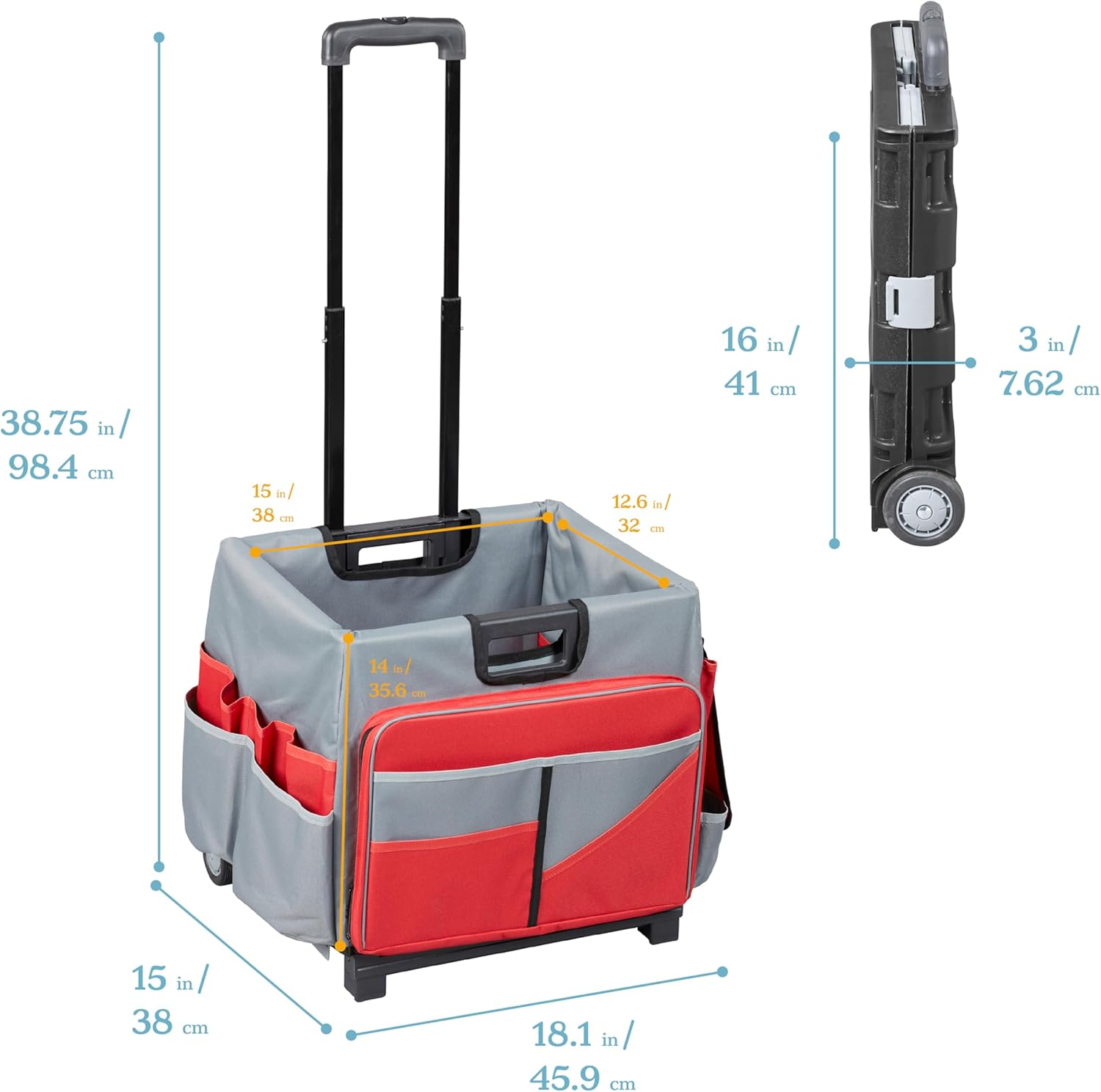
Rolling bag systems (representative brands: ECR4Kids ELR-22300, LOVEVOOK rolling bag with dolly, Arcoyard rolling teacher bag) pair a fabric tote — typically nylon or reinforced canvas — with a separate wheeled dolly frame. The bag detaches from the dolly, which matters if you need to lift it into a car backseat, carry it upstairs, or store it flat. External organizational pockets let you sort markers, scissors, and paperwork without digging into the main compartment. The tradeoff: the bag only sits straight on the dolly when it’s reasonably full. Lightly loaded, the bag slumps and throws off balance, making steering awkward. That failure pattern shows up consistently in owner reviews aggregated across retail marketplaces for both LOVEVOOK and Arcoyard products, and it is the single most common structural frustration in this category.
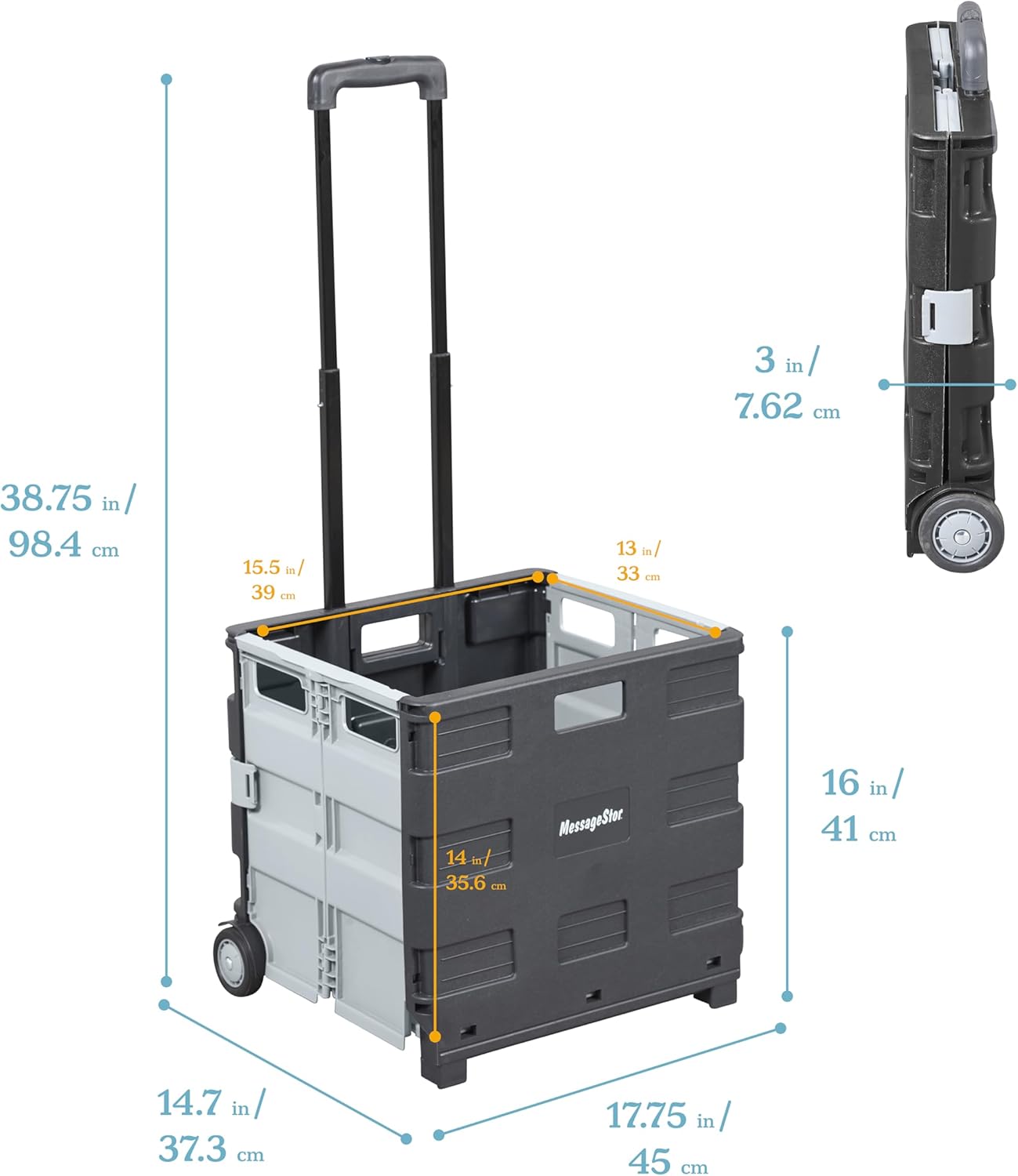
Rigid crate carts (representative brands: dbest Products Quik Cart, CleverMade Haul-It, Flash Furniture collapsible crate cart) use a hard plastic or high-density resin bin on a permanent or integrated frame. They hold their shape whether full or empty, and clean faster — a damp wipe handles most spills. But the bin is fixed to the frame, so the whole unit travels together: into the trunk, up the stairs, through the door. That works well in schools with elevators and a loading area near your room. If you climb three flights with an armload of supplies each morning, the rigid format is harder to manage in segments.
By the Numbers
| Design | Typical price range | Weight (empty) | Load capacity | Bag detaches? |
|---|---|---|---|---|
| Rolling bag system (ECR4Kids, LOVEVOOK) | $45–$95 | 4–7 lbs | 30–50 lbs | Yes |
| Rigid crate cart (dbest, CleverMade) | $40–$120 | 6–12 lbs | 50–80 lbs | No |
| Premium canvas bag + aluminum dolly | $80–$140 | 5–8 lbs | 40–60 lbs | Yes |
Where Each Design Actually Breaks Down
Rolling Bag Systems: Failure Modes Worth Naming
The ECR4Kids canvas bag cart has a loyal owner base — teachers who purchase a second unit after the first, which is a meaningful signal. But two structural failure patterns show up consistently in aggregated ECR4Kids owner reviews:
Handle stress under multi-building daily use. Rigid plastic handle components are the first thing to crack when a bag system is used hard across multiple buildings per day. ECR4Kids’s published product specifications do not list a handle weight rating, so you are reading failure patterns in owner reviews to estimate real-world durability limits.
Base failure from non-school storage. Owner reviews for the ECR4Kids bag include reports of base cracking after the cart was stored in a vehicle between sessions — a UV and heat exposure scenario that fabric-and-plastic bag systems are not engineered to handle. If your cart lives in a hot car through a summer session or after-school program, rigid crate systems tolerate that condition better by design.
What holds up well: external pocket organization is consistently cited as a genuine differentiator over bare crates. Teachers in aggregated ECR4Kids reviews describe the pocketed layout as a meaningful workflow improvement. Separately, rain covers included with ECR4Kids and CleverMade products are mentioned unprompted by owners in wet climates — Pacific Northwest, Pacific Coast — which suggests the feature earns its place in the real world rather than just on the spec sheet.
Rigid Crate Carts: Where They Earn Their Keep
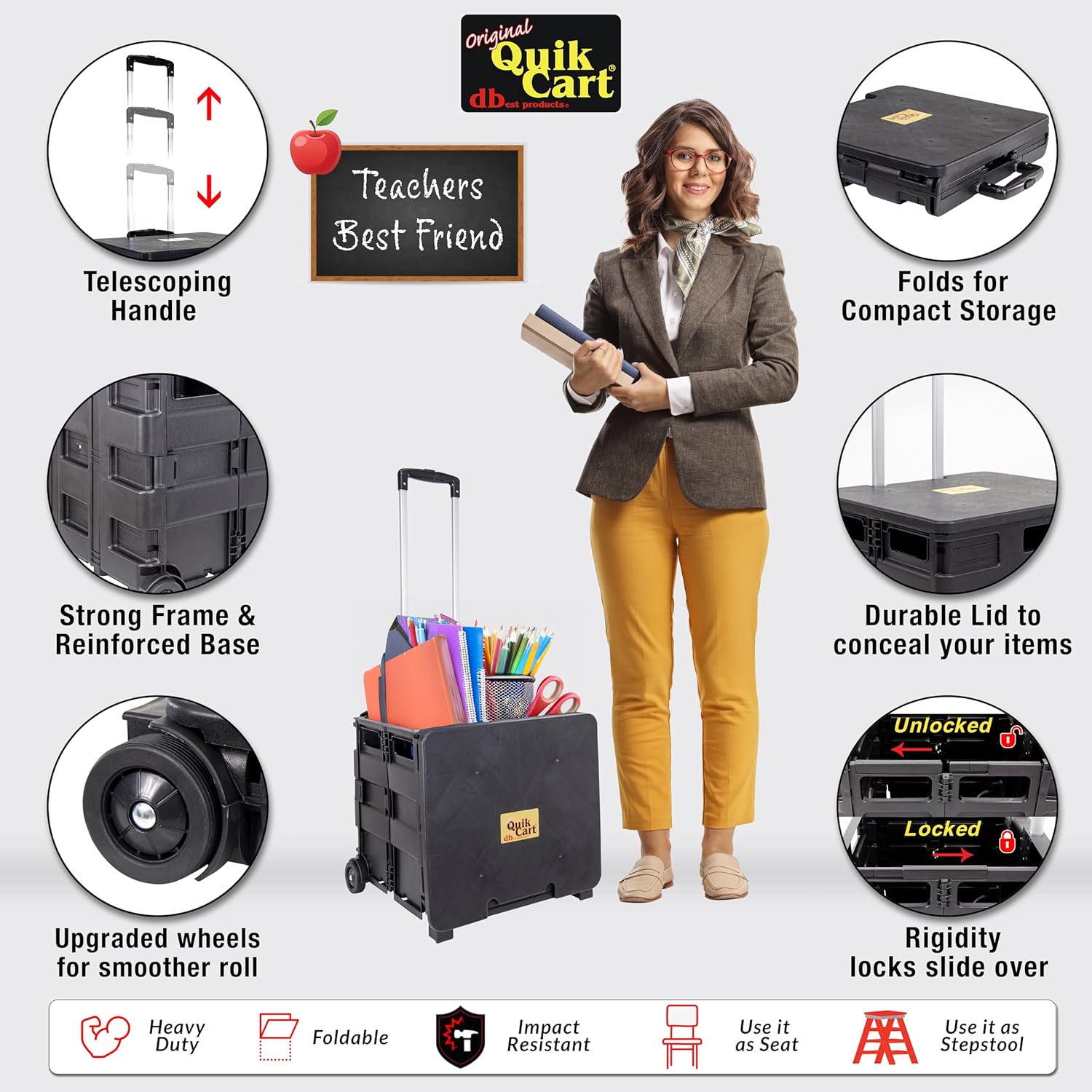
The dbest Products Quik Cart, per published specifications on dbestproducts.com, carries a 75-pound load rating, and owners who use the cart for heavy art supply hauls — reams of paper, clay blocks, stacked supply bins — generally confirm that rating holds in aggregated retail marketplace reviews. Caster performance on hard classroom floors is rated positively at this price tier. CleverMade’s Haul-It adds a lidded rigid bin, which matters when you’re transporting loose materials that can’t get wet or shifted.
The rigid crate’s core limitation is that stairs, car backseats, and tight elevator cabs all become friction points when the bin and frame are a single unit. Teachers who work in older buildings without elevators, or who load supplies into a compact car daily, will find the rigid format more disruptive than its spec sheet suggests.
The Tradeoffs That Decide Your Purchase
Multi-Floor, Multi-Building Travel
ECR4Kids
$26.97
In stock on Amazon
Check price on AmazonIf your daily route includes stairs — even one flight, daily — the detachable bag system has a structural advantage that compounds over a 180-day school year. You pull the bag off the dolly, carry it up, and reattach on the other side. With a rigid crate, you’re lifting the whole unit or leaving it at the bottom.
Aggregated owner reviews for LOVEVOOK and Arcoyard products include a notable cluster of special education teachers and school nurses who specifically name the detachable format as the reason they chose a bag system over a crate. One Arcoyard reviewer described the detachable format as enabling her to manage stairs without aggravating a knee injury through a full semester — not a marketing claim, but a repeated practical pattern across multiple owner accounts.
For budget-conscious buyers who primarily need stair-friendly portability, the LOVEVOOK rolling bag with dolly and the Arcoyard rolling teacher bag both sit in the $45–$75 range and address this use case directly.
dbest
$39.99
In stock on Amazon
Check price on AmazonHeavy Loads on Flat Routes
If your daily commute is entirely flat — single-floor school, adjacent portable, covered outdoor path — and you regularly transport more than 50 pounds of materials, a rigid crate cart earns its place. The dbest Products Quik Cart’s published 75-pound load rating and positive caster reviews in the aggregated retail marketplace make it the mid-tier answer for flat-route heavy haulers. The CleverMade Haul-It adds a lid, which matters in wet conditions or when transporting loose items that shift.
The ergonomic tradeoff is real: both carts are engineered for average female height (approximately 5’4”–5’6”), so taller users should confirm handle height in the published spec before purchasing. Most rigid carts in the $40–$120 range top out at 38–40 inches extended — not comfortable for a six-foot user who needs approximately 42–44 inches of wrist-height clearance. This is not a problem marketing photos reveal; it requires reading the published number.
dbest
$39.99
In stock on Amazon
Check price on AmazonWet Climates, Car Transport, and Organizational Workflow
KEDSUM
$104.99
In stock on Amazon
Check price on AmazonFor teachers who cross parking lots in rain, commute between portables, or need a cart that survives being left near building exits in damp weather, the rain cover is a functional feature rather than a gimmick. ECR4Kids includes a rain cover with its canvas bag cart; this detail is mentioned unprompted in owner reviews from wet-climate regions and represents a genuine differentiator over open-top crate carts, which are vulnerable to rain damage — wet cardboard, ruined papers, and saturated supplies are common complaints in open-crate owner reviews.
For car transport, the detachable bag system (Arcoyard, LOVEVOOK) wins on logistics: the bag stows on the backseat; the dolly folds flat to approximately 3–4 inches thick per published product dimensions. Rigid crate carts don’t segment this way and require trunk or hatch loading. If you drive a compact car or sedan and need your supplies accessible without opening the trunk every trip, the detachable bag format solves this by design.
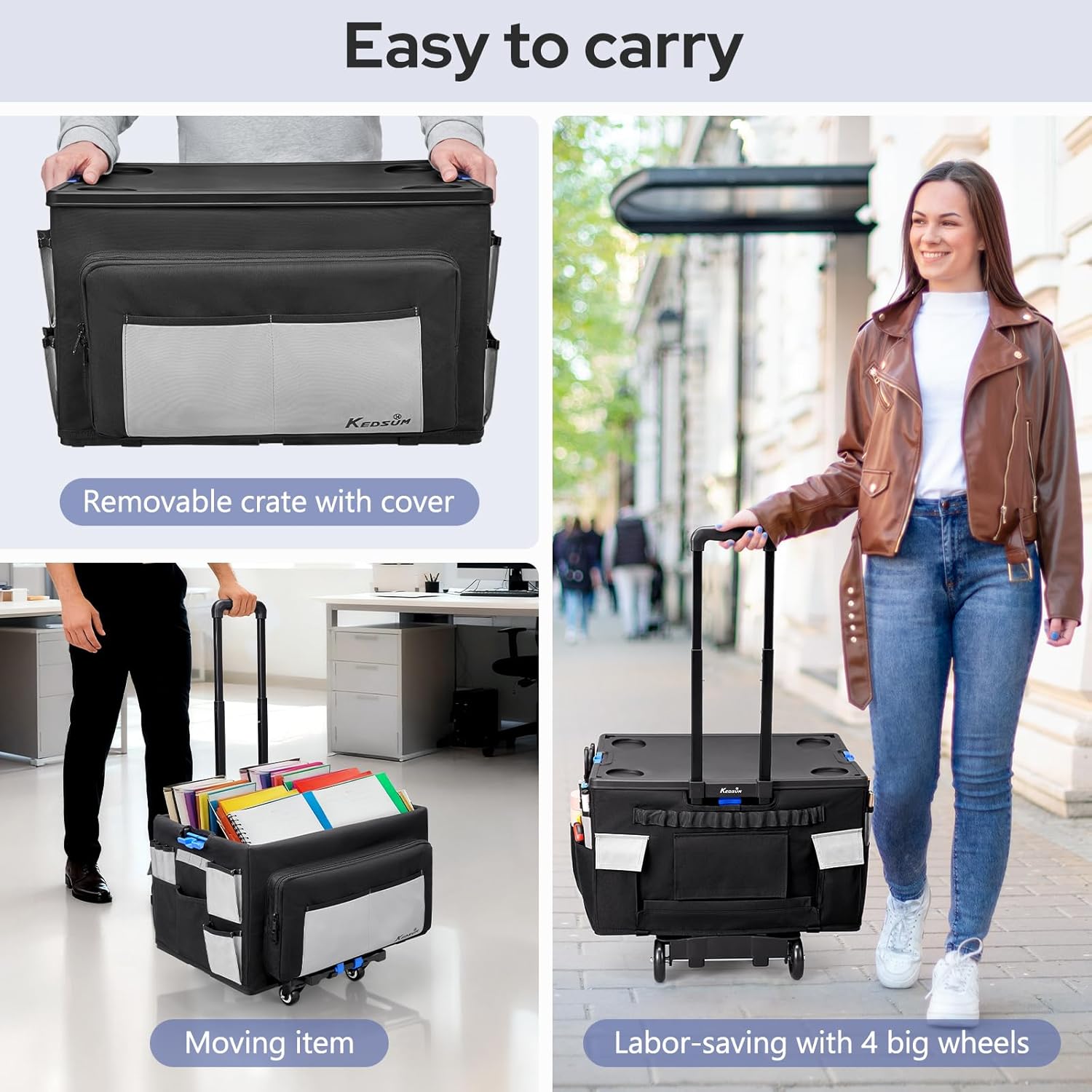
For teachers whose workflow depends on segmented organization — sorting markers, scissors, paperwork, and specialty supplies — rolling bag systems, particularly the ECR4Kids ELR-22300, maintain a clear advantage. Rigid crates offer one bin; pocketed bag systems offer segmented exterior storage that teachers consistently describe in aggregated reviews as a meaningful daily efficiency gain.
KEDSUM
$104.99
In stock on Amazon
Check price on AmazonIf X, Then Y: Decision Framework
The ergonomic case for matching cart format to route is consistent with general material-handling principles: lifting a combined load when a segmented load is available increases cumulative joint stress, particularly at the shoulder and knee. The American Occupational Therapy Association (plain-text reference: AOTA, aota.org, occupational performance and activity demands framework) addresses activity demand analysis in ways that apply directly to tool selection for repetitive daily tasks — choosing the right format for your specific route is an ergonomic decision, not just a convenience preference.
- If you cross stairs or multiple buildings daily: Choose a rolling bag system. The detachable format saves joint stress over a full school year.
- If your route is all flat ground and you carry over 50 lbs: Choose a rigid crate cart. The higher load rating and structural stability are worth the format limitations.
- If you’re over 5’10”: Verify the extended handle height in the published spec sheet before purchasing. Most carts in this category top out at 38–40 inches, short of the ~42–44 inches a six-foot user needs. Confirm the number, not the photo.
- If you’re in a wet climate or cross a parking lot in rain: Prioritize ECR4Kids (rain cover included) or CleverMade Haul-It (lidded rigid bin). Open-top crates are a problem waiting to happen.
- If you transport the cart in a car backseat regularly: The detachable bag format wins on logistics alone.
- If external organizational pockets matter to your workflow: Rolling bag systems maintain a clear category advantage over rigid crates.
Frequently Asked Questions
Which design is better for someone who moves between multiple floors and buildings every day? The rolling bag system handles multi-floor travel better. You carry just the bag up stairs and reattach the dolly on the other side. Rigid crate carts require lifting the whole unit, which becomes a cumulative ergonomic problem across a full school year of daily use.
Does the canvas bag stay upright on the dolly when it is not fully packed? Not reliably. This is a widely reported complaint in aggregated LOVEVOOK and Arcoyard owner reviews. A lightly loaded bag slumps to one side and steers poorly. If you frequently travel with a partial load, either pack a structural insert — a stiff cardboard divider or a rigid file box inside the bag — or consider a rigid crate, which holds its shape regardless of fill level.
Is there a rolling teacher cart that fits in a car backseat rather than a trunk? The detachable bag systems (Arcoyard, LOVEVOOK) are the right category. The bag stows on the backseat; the dolly folds flat to roughly 3–4 inches thick per published product dimensions. Rigid crate carts do not segment this way.
How do these carts handle in rain or wet conditions? ECR4Kids includes a rain cover; CleverMade’s lidded rigid format handles rain well. Open-top crate carts without lids are genuinely vulnerable — materials get wet, cardboard collapses, and papers are ruined. Owners in wet climates consistently flag the rain cover as a feature they didn’t know they needed until they’d gone without it.
What handle height works best for users over 5’10”? A wrist-height handle for a six-foot user is approximately 42–44 inches. Most carts in this category top out at 38–40 inches extended, which means stooping. Before purchasing, confirm the extended handle height in the published specification — not the product photo, the published number. Very few carts in the $40–$120 range clear 42 inches.
How long do these carts realistically last with daily school-year use? Based on aggregated owner review patterns across retail marketplaces, rolling bag systems used across multiple buildings daily show handle or base stress within one to two school years under hard use. Rigid crate carts in the dbest and CleverMade tier tend to last two to four years before wheel or axle degradation becomes the limiting factor. Neither category is a five-year purchase at this price point. Budget accordingly — and check whether your school’s applicable grant programs allow supply and equipment funding, which can offset replacement purchases without out-of-pocket cost.