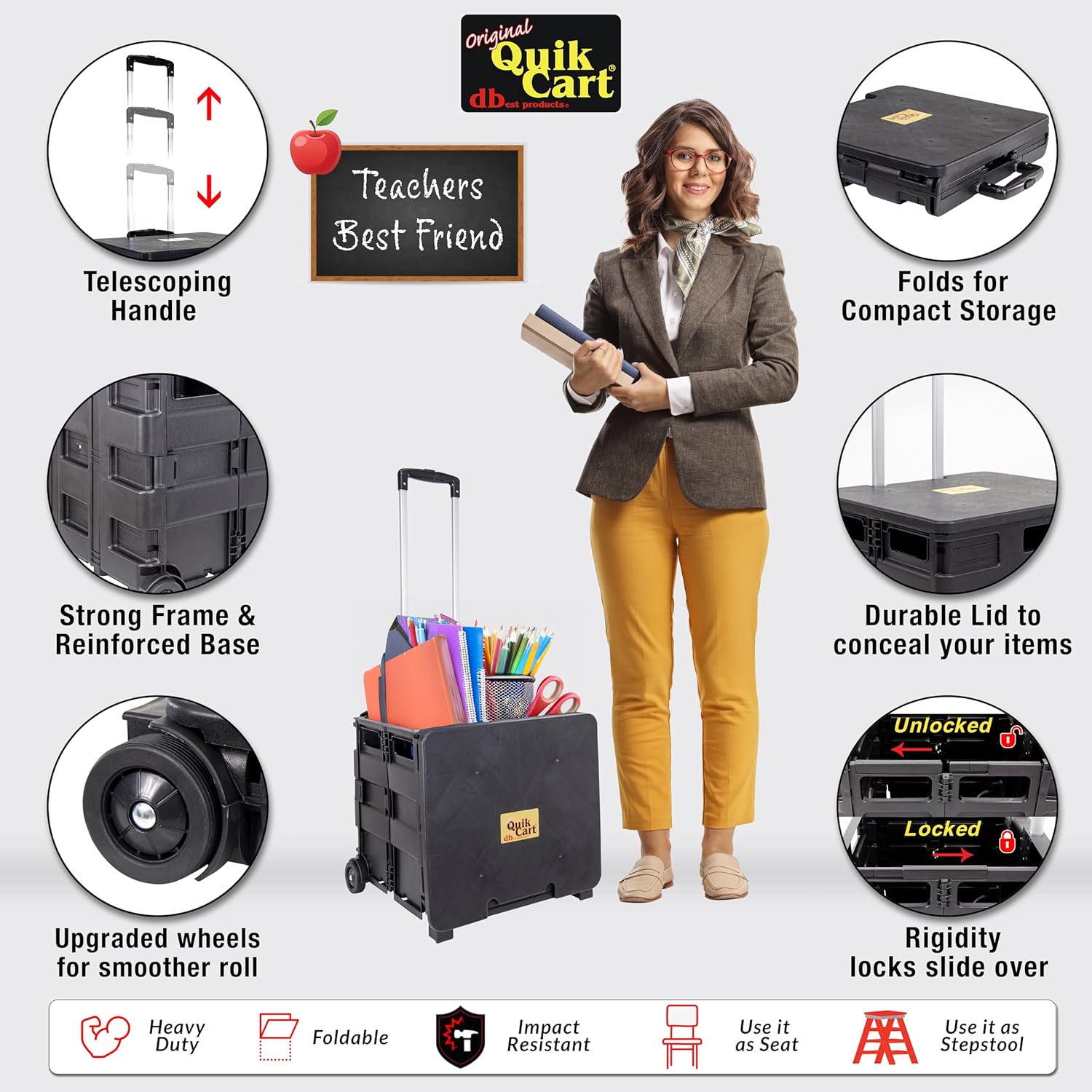
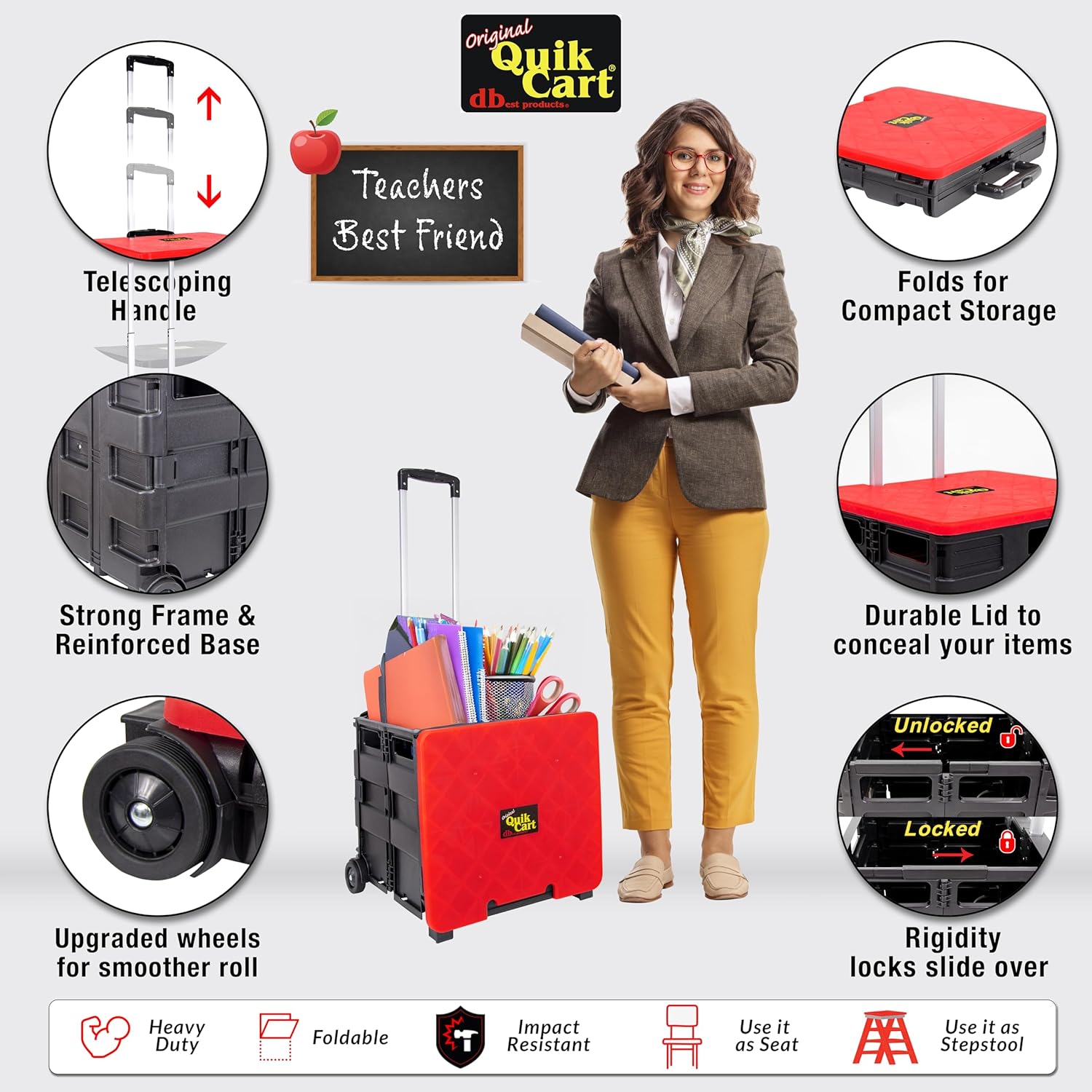
A collapsible rolling crate is exactly what it sounds like: a fabric or hard-sided bin mounted on wheels that folds flat — usually to about two or three inches thick — when you’re done with it. The “rolling” part is obvious; the “collapsible” part is what makes this category genuinely useful for people who don’t have a dedicated storage room for their gear. You can slide it under a bed, hang it on a hook, or tuck it behind a door when the school day or therapy session ends. This guide covers the four models that come up most often when buyers in classrooms, clinics, and home workshops are making a real purchasing decision: the dbest Quik Cart, the WORKPRO Collapsible Folding Cart, the CleverMade Snapbasket, and the dbest Trolley Dolly (a flat-platform variant that rounds out the comparison). By the end, you’ll know which one fits your situation — and which tradeoffs you’re actually accepting when you choose the cheaper option.
| EDITOR'S PICKOlympia Tools 85-188 Pack-N-Rol… | Mid-tierdbest products Quik Cart Collap… | Budget pickdbest products Quik Cart Collap… | |
|---|---|---|---|
| Weight capacity | 150 lbs | 80 lbs | 80 lbs |
| Material | — | Heavy duty plastic | Heavy duty plastic |
| Use as seat | — | ✓ | ✓ |
| Color | Black | Red | Black |
| Price | $108.97 | $43.90 | $39.99 |
| See on Amazon → | See on Amazon → | See on Amazon → |
What You’re Actually Buying: Frame, Fabric, and Caster Quality
The three components that determine whether a collapsible rolling crate earns its keep for a second year — or ends up in the donation bin by November — are the frame material, the bag or bin construction, and the casters (wheels).
Frame material is almost universally steel tubing in this price range ($40–$120). The diameter and gauge of that tubing determines how well the cart absorbs the kind of abuse that comes from stairs, gravel parking lots, and being loaded past its stated capacity by optimistic teachers. The dbest Quik Cart uses a thick-walled steel frame that multiple long-run owners describe as surviving daily office-to-car commutes and court-side sports use for years before showing wear. Reviewers across multiple platforms report buying a second unit after the first finally gave out — treating the replacement as a compliment to the product rather than a failure of it. That’s a meaningful durability signal: the cart lasted long enough that users felt loyalty, not resentment, when it reached end of life.
Bag or bin construction splits the category into two functional types. Soft-sided fabric bags — used by the dbest Quik Cart and CleverMade Snapbasket — are lighter and can be wiped clean or, in the Snapbasket’s case, hosed down after garden and outdoor use. No other model in this cluster receives that treatment in owner feedback. If you’re sourcing for a setting where cleanability matters (a clinic room, a sensory garden, an outdoor recreation program), that detail is worth noting.
Casters are where cheap carts reveal themselves. In this tier, you’re looking at 2.5- to 4-inch diameter plastic or rubber wheels. The WORKPRO Collapsible Cart earns consistent praise for its locking rear wheels, which owners in recovery or remote field-repair situations describe as genuinely functional rather than decorative — a real differentiator if you need the cart to stay put while working from it rather than just moving it from point A to point B.
Comparison at a glance:
| Model | Capacity (approx.) | Folds to | Wheel lock | Hose-down rated |
|---|---|---|---|---|
| dbest Quik Cart | 150 lbs | ~3 in. flat | No | No |
| WORKPRO Collapsible Cart | 110 lbs | ~2.5 in. flat | Yes (rear) | No |
| CleverMade Snapbasket | 100 lbs | ~3 in. flat | No | Yes |
| dbest Trolley Dolly | 200 lbs (platform) | ~1.5 in. flat | No | No |
Capacity figures from published manufacturer specifications. Wheel-lock and hose-down ratings derived from aggregated owner review patterns.
The Durability Tradeoff Nobody Mentions in the Product Listing
Here’s the honest cost of the entry tier that Consumer Reports’ utility cart and wagon ratings category and Wirecutter’s rolling cart roundup both circle around: the failure point on most collapsible carts isn’t the fabric and it isn’t the frame — it’s the corners and the hinge pins where the frame collapses.
For the dbest line specifically, broken-corner-on-arrival is a recurring complaint pattern across aggregated reviews. The damage is usually structural at one hinge point, and the cart often still functions despite it. The frustration reviewers name is the return math: shipping the cart back costs nearly as much as the cart itself, and replacement processes can be slow. For a classroom teacher buying one cart out of pocket, that’s a real risk worth naming. For a therapist buying six units on a program budget with a purchase order and an institutional return account, the calculus shifts — you have leverage a solo consumer doesn’t.
The decision rule here is simple: if you’re buying one or two units for personal use, consider paying $20–$30 more for a model with a clear damage-on-arrival replacement policy and a domestic warranty contact. If you’re buying six or more on an institutional account, your vendor relationship usually covers the return friction regardless of brand.
One more thing worth naming: the tilt-and-pull technique. The dbest Quik Cart is designed to be tipped back at roughly a 45-degree angle and pulled, not pushed upright like a grocery cart. Owners who figure this out early report smoother rolling and less frame stress. Users who push it upright report more wobble and faster wear. That’s not a flaw in the design; it’s a use-case mismatch. If your program involves staff who will grab the cart and push it without instruction, the WORKPRO’s more upright handle geometry may be a better fit for your setting.
Matching the Cart to Your Setting
For K–12 Teachers and Makerspace Coordinators
Art teachers and makerspace coordinators sourcing carts for activity stations typically need two things: maximum load volume and fast setup. The dbest Quik Cart’s open-bin design loads quickly and handles awkward shapes — rolls of paper, bins of supplies, bags of sporting goods. The tilt-and-pull design works well in hallway-to-classroom transit once staff are oriented to the technique.
The Trolley Dolly platform variant is worth considering if you’re stacking standardized bins rather than loading loose materials. The flat deck gives a stable surface, and the 200-lb capacity handles heavier loads than any bag-style model in this comparison. Apartment Therapy’s 2024 collapsible cart roundup notes that the buyers most satisfied with carts at this tier are those who picked the model that matched their actual movement pattern — carry-and-fold versus leave-deployed, indoor versus outdoor — rather than defaulting to the highest-capacity option available.
dbest
$39.99
In stock on Amazon
Check price on AmazonFor Occupational Therapists and Therapeutic Recreation Specialists
Therapists sourcing carts are often looking for something the basic collapsible crate category doesn’t fully deliver: organized access pockets, not just a bin. The American Occupational Therapy Association’s Occupational Therapy Practice Framework: Domain and Process, 4th edition, and the National Council for Therapeutic Recreation Certification’s Standards of Practice for Therapeutic Recreation both emphasize structured activity delivery — which means a cart in clinical or community settings functions as a mobile workstation, not just a haul-it-there container.
The WORKPRO Collapsible Cart has exterior divided side pockets that owners use for adaptive tools, documentation, and small supply kits. Its locking rear wheels mean you can park it at a client’s bedside or in a hallway without it rolling. The CleverMade Snapbasket has fewer pockets but wins on cleanability for outdoor or home-visit settings where the cart may encounter muddy terrain or wet surfaces.
Neither model is a clinical-grade cart — for fixed-facility settings, purpose-built clinical carts from institutional suppliers operate in the $400–$1,200 range. But for community-based therapists doing home visits or outdoor programming, a $60–$90 collapsible cart with exterior pockets and lockable wheels covers substantial ground at a fraction of the cost.
dbest
$43.90
In stock on Amazon
Check price on AmazonFor Home Workshop and Renovation Users
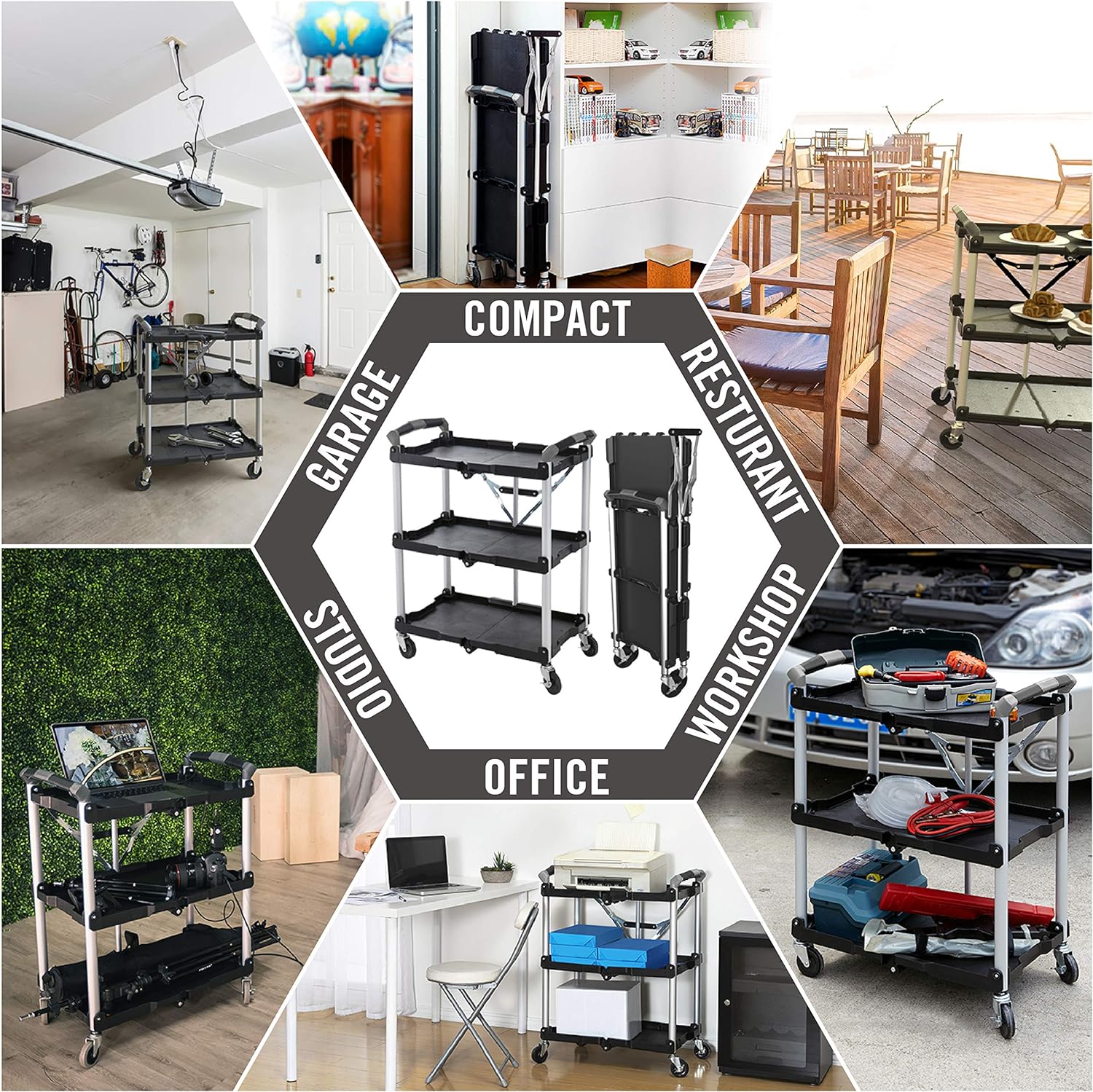
Workshop and renovation buyers are usually solving a specific problem: tools or supplies that need to move between a garage and a work site, or between floors in a gut-renovation project. The dbest Trolley Dolly platform is the most honest choice here — the flat deck handles tool bags, lumber offcuts, and awkward hardware store hauls better than any bag-style model. The WORKPRO’s locking wheels matter in this context too: if you’re loading the cart on a sloped driveway or an uneven subfloor, wheel locks prevent the cart from rolling while you work from it.
Wirecutter’s rolling cart and utility wagon roundup flags a consistent pattern in this segment: buyers who underestimate load capacity relative to their actual use case end up replacing carts sooner. For workshop use, the Trolley Dolly’s 200-lb platform rating gives meaningful headroom above what any bag-style model offers.
Olympia
$108.97
In stock on Amazon
Check price on AmazonFrequently Asked Questions
1. Will this cart fit in a standard car trunk when folded?
All four models fold to under four inches thick. The dbest Quik Cart folds to approximately 23” × 13” × 3” — that fits behind a rear seat or flat in a sedan trunk without folding the seat down. The Trolley Dolly’s platform is slightly wider (about 26” across) but fits in most SUV cargo areas and mid-size trunks. If you’re regularly car-transporting the cart, measure your trunk floor before buying; width is usually the constraint, not thickness.
2. How much does handle height matter, and which models are best for tall users?
Handle height matters more than most buyers expect. The dbest Quik Cart’s handle has been flagged by taller reviewers — those 6’1” and above — as too short for comfortable sustained pulling. You’re slightly hunched over, which becomes fatiguing on long walks across a campus or parking lot. The WORKPRO’s handle geometry sits a few inches higher in deployed position and receives fewer complaints from tall users. If you’re over 6 feet and pulling this cart daily, the WORKPRO is the more ergonomically consistent choice based on aggregated owner feedback.
3. Can these carts handle outdoor terrain like gravel or grass?
Honestly: not well. The 2.5- to 4-inch plastic wheels on all four models are designed for smooth floors and paved surfaces. Gravel is manageable for short distances at low load; grass degrades performance significantly, and soft or wet grass can sink the wheels. The CleverMade Snapbasket gets the strongest reviews for outdoor use because its fabric construction allows hosing down after muddy terrain — but that’s a cleaning advantage, not a traction advantage. For regular outdoor terrain, you’re looking at a different product category: garden wagons with 8-inch or larger pneumatic wheels.
4. What typically breaks first, and is it worth repairing or rebuying?
The hinge pins and corner joints at the frame’s collapse points are the most common first failure across the dbest line. Once a hinge pin shears, the cart won’t fold flat. Replacement pins are not sold as discrete parts by most vendors. Repair is theoretically possible with hardware-store hardware, but the practical reality is that most users rebuy. As noted above, the owners who treat a rebuy as a positive signal are the ones who ran the original cart hard for years before failure. If the cart dies in under 18 months of normal use, that’s a product failure. If it dies after four years of daily stairs and trunk-loading, that’s a lifecycle.
5. Which collapsible cart works best for therapists who need organized pockets, not just a bin?
The WORKPRO Collapsible Cart is the strongest match in this tier for pocket-based organization. Its exterior includes divided side pockets sized for binders, adaptive tools, and documentation folders. The locking wheels mean you can park it at a client’s location without it rolling. The CleverMade Snapbasket has fewer pockets but wins on cleanability. Neither replaces a clinical-grade activity cart for a fixed facility setting — but for community-based or home-visit work where you’re hauling supplies in a personal vehicle, the WORKPRO’s combination of organization and wheel locks is the most purpose-fit option in this price range.
The Decision Rule
Maximum load capacity and longest documented lifespan from daily heavy use: dbest Quik Cart — learn the tilt-and-pull technique; buy on an account with institutional return coverage if possible.
Wheel locks and organized pockets for a mobile professional workflow: WORKPRO Collapsible Cart, especially for tall users or workflows requiring one-handed operation.
Outdoor or garden-adjacent work requiring the cart to be hosed down: CleverMade Snapbasket is the only model in this cluster designed for that use.
Moving standardized bins or heavy tool loads with a platform rather than a bag: dbest Trolley Dolly — the 200-lb capacity and flat deck make it the most honest choice for transport-heavy roles.
The honest summary: all four carts work. The differences are specific enough that choosing the wrong one for your actual movement pattern costs you more in daily friction than the $20–$40 price spread between them. Match the model to the terrain, the handle height to the user, and the pocket configuration to the workflow — and you’ll get years of use out of whichever you pick.