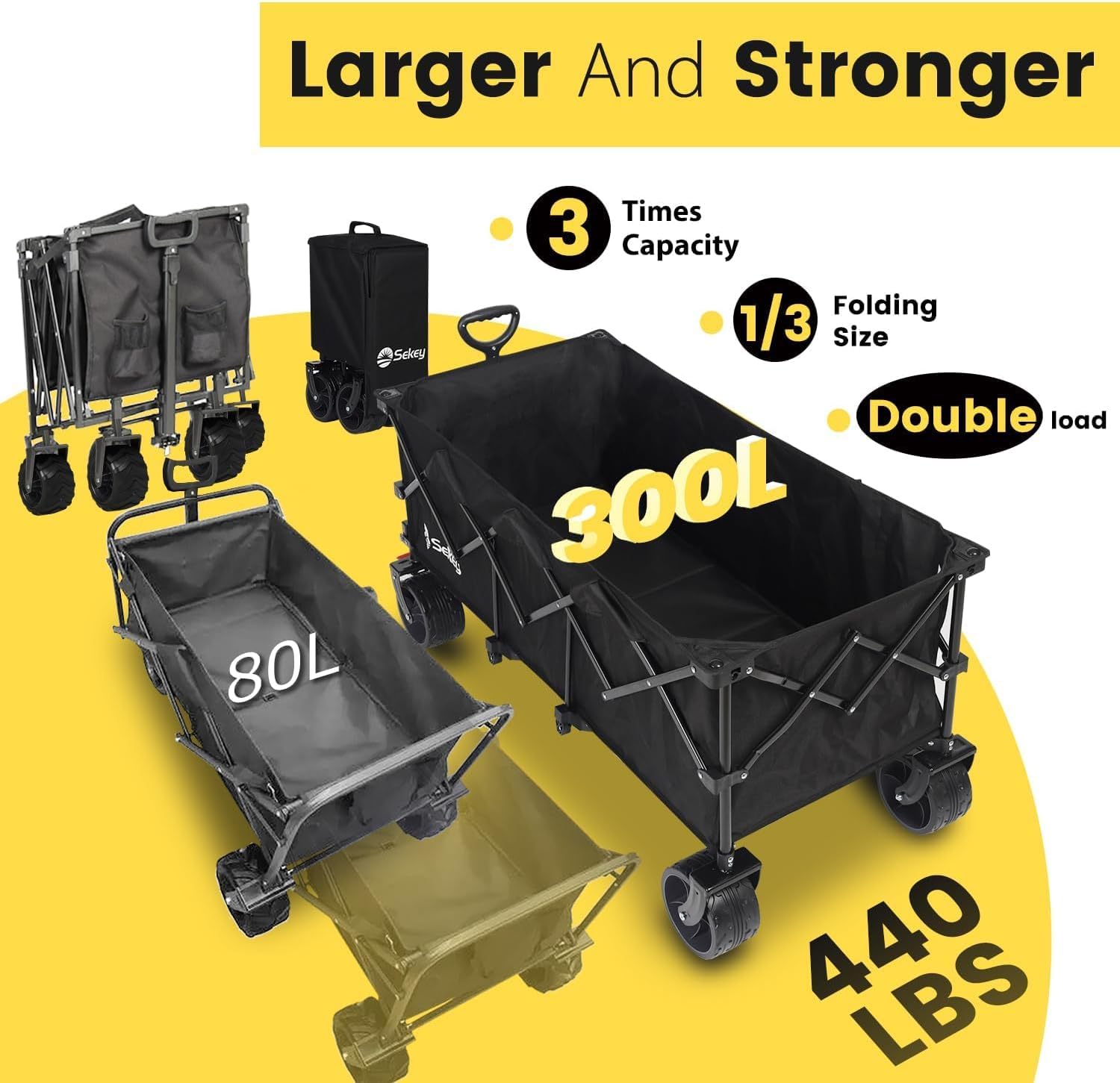
If you’ve ever watched someone wrestle a canvas wagon full of mulch across a gravel path while another person wheels a boxy crate down a school hallway, you’ve already seen the core difference between these two categories — even if the packaging on both says “portable folding cart.” A collapsible folding wagon (fabric-sided, four-wheeled, often with oversized all-terrain tires) is built around raw outdoor hauling capacity. A rolling crate (a rigid or semi-rigid box on small inline wheels with a pull handle like a piece of luggage) is built around indoor organization and transit. They overlap on price and footprint, which is exactly why buyers end up with the wrong one. This article breaks down who buys each, what owners actually report after extended use, and ends with a plain-language decision rule so you can stop second-guessing.
| EDITOR'S PICKOlympia Tools 85-188 Pack-N-Rol… | Mid-tierCleverMade Collapsible Crate on… | Budget pickdbest products Quik Cart Collap… | |
|---|---|---|---|
| Weight capacity | 150 lb | — | 80 lb |
| Volume | — | 35L | — |
| Wheels | — | 4-wheel | — |
| Lid included | — | ✓ | — |
| Handle included | — | ✓ | — |
| Seat use | — | — | ✓ |
| Price | $108.97 | $59.99 | $39.99 |
| See on Amazon → | See on Amazon → | See on Amazon → |
The Two Buyer Profiles — and Why They Keep Getting Conflated
The marketing copy for wagons and rolling crates tends to borrow from each other’s territory. Wagon listings show classroom supplies. Crate listings show park outings. The real-world review record tells a cleaner story.
Owners of wagons from brands like Sekey and GOFLAME consistently describe bulk outdoor use: yard waste removal, beach trips with umbrellas and coolers, camping gear over uneven terrain, wholesale-club runs where a single load might top 150 lbs. Across aggregated reviews, the pattern is nearly uniform — the feature owners praise above everything else is the wide all-terrain wheel (typically 7–8 inches in diameter, with a knobby tread). That wheel is the product’s entire value proposition. It’s what lets one person drag a full load over gravel, grass, and cracked sidewalks without the cart tipping or the handle yanking their shoulder.
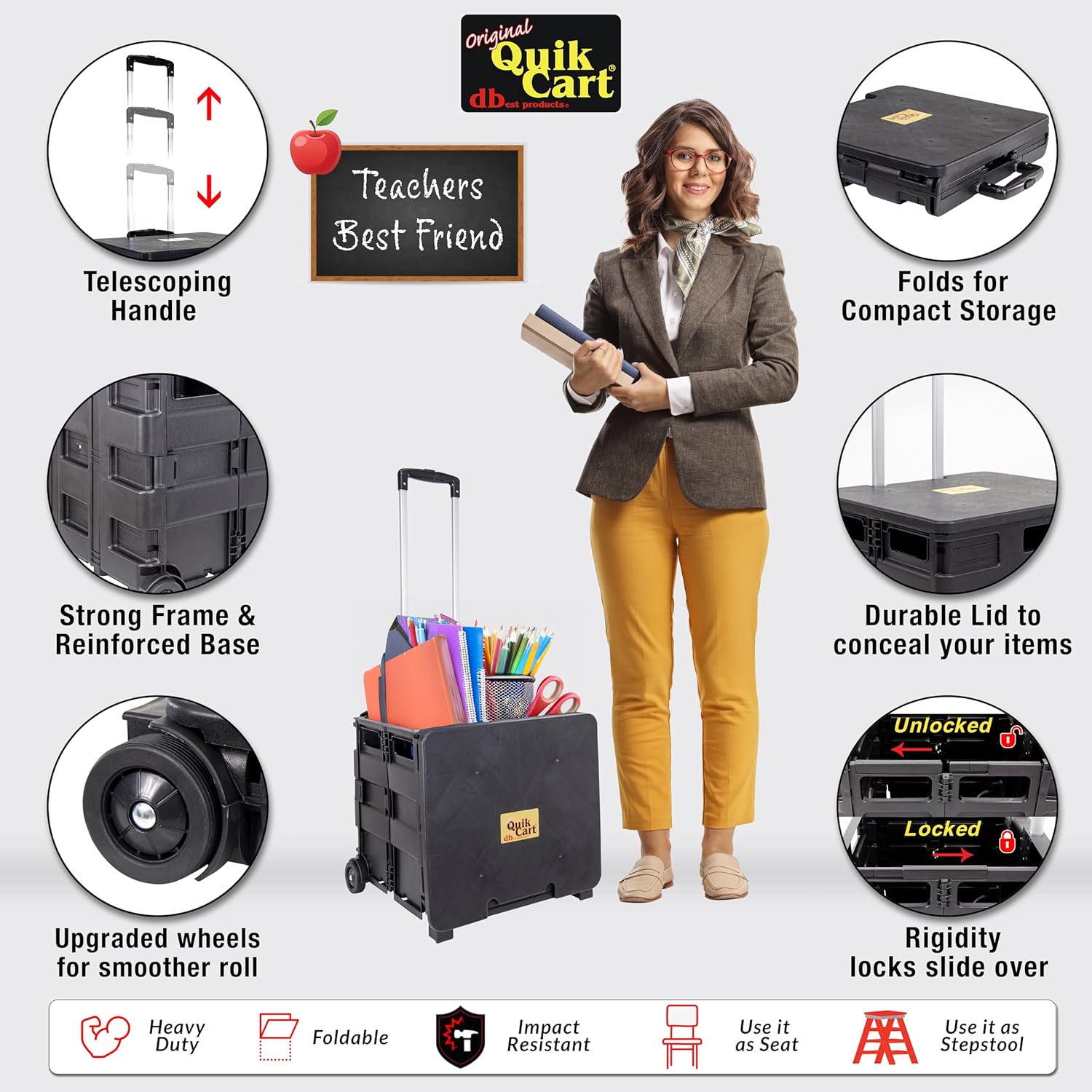
Rolling crate owners are a different population. The dbest Quik Cart and CleverMade crate buyers are overwhelmingly indoor-transitional users: K–12 teachers moving supplies between classrooms, occupational therapists carrying program materials between clinic rooms, authors hauling inventory to book events, and university professors commuting across campus. What they keep returning to in reviews isn’t capacity — it’s organizational architecture: the exterior pockets, the rigid lid, and the slim folded profile that slides under a desk or into a closet.
Wirecutter’s coverage published in The New York Times — “The Best Folding Wagons,” staff editorial — and Apartment Therapy’s “Best Rolling Carts for Organizing,” staff editorial, both note this divide clearly: the decision between wagon and crate is less about size and more about terrain and structure. One detail reviewers surface that no marketing copy mentions is that the dbest Quik Cart’s rigid lid doubles as a seat at events. For a solo author at a book fair standing behind a table for four hours, that’s not a novelty — it’s genuine value. The same lid also provides meaningful protection for loose materials that a wagon’s open top or drawstring cover cannot match.
Head-to-Head: The Numbers That Actually Matter
Before getting into qualitative tradeoffs, here is the spec snapshot that drives the decision:
| Spec | Sekey / GOFLAME wagons (typical) | dbest Quik Cart (typical) |
|---|---|---|
| Wheel diameter | 7–8 in, all-terrain knobby | 3–4 in, swivel inline |
| Weight capacity (manufacturer-rated) | 150–176 lbs | 75–100 lbs |
| Folded depth (approximate) | 8–11 in | 5–7 in |
| Lid / cover | Drawstring mesh or snap fabric | Rigid latchable lid |
| Interior pockets | None standard | Yes, multiple |
Published specs put wagon capacity nearly double that of the crate format — but that headline number misrepresents the real gap. A crate rated for 75 lbs over smooth flooring is genuinely comfortable at that load. The same 75 lbs in a wagon over rough outdoor terrain is well within its margin. The categories diverge at the edge cases: the person hauling 120 lbs of river rocks needs the wagon; the person hauling 40 lbs of lesson-plan binders needs the crate.
Where Each Format Earns Its Keep
The clearest way to resolve this comparison is to examine each format in its strongest context, then stress-test it against the other format’s home environment.
Budget Entry Point: The Open-Bed Wagon for Outdoor Bulk Hauling
For buyers whose primary need is raw outdoor carrying volume — yard waste, beach gear, camping loads, or bulk-retail runs — the wagon format at its entry price is the correct starting point. Models in the Sekey and GOFLAME range offer 150-plus-lb capacity, all-terrain 7–8 inch knobby wheels, and a fold-flat design, typically for under $100.
The all-terrain wheel is the product’s entire value proposition at this tier. It is what allows one person to pull a fully loaded cart across gravel, grass, and cracked sidewalks without the cart tipping or requiring a second set of hands. This Old House, in its “Best Utility Wagons” product guide, notes that all-terrain wheels optimized for grass and gravel sacrifice the low rolling resistance you want on polished institutional flooring — a tradeoff that is entirely acceptable for buyers who never intend to use the cart indoors.
Where the budget wagon falls short: the open-top design creates an organizational problem the price point does not solve. Supplies shift during transit and arrive jumbled. For outdoor loads — firewood, mulch, camping gear — that rarely matters. For any sorted indoor cargo, it matters considerably. Buyers who find themselves adding a mesh insert to solve the organization problem are already spending toward the next tier.
dbest
$39.99
In stock on Amazon
Check price on AmazonMid-Tier Pick: The Rolling Crate for Indoor-Transitional Users
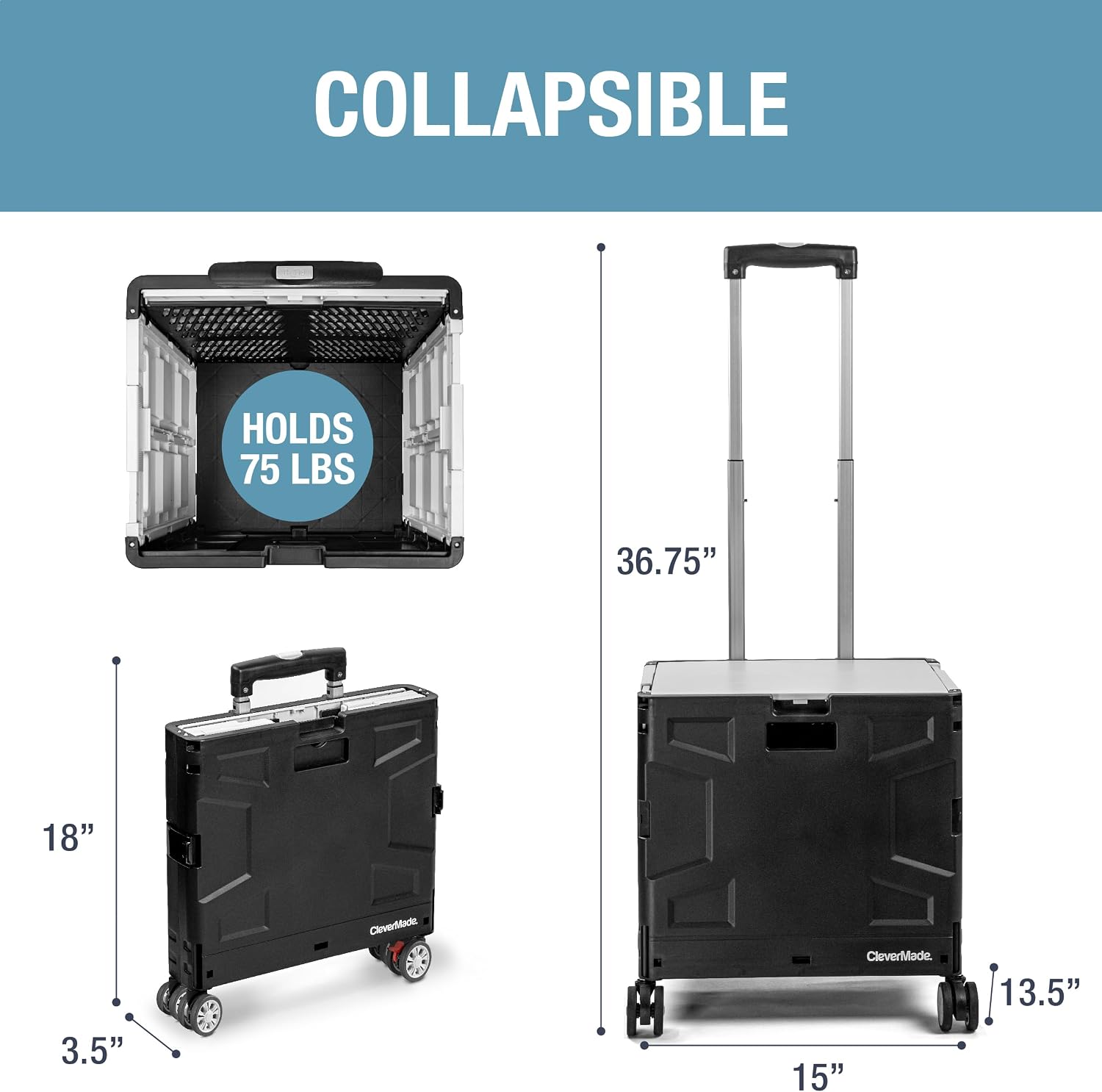
The dbest Quik Cart and CleverMade crate formats occupy a mid-tier price band that reflects their more complex construction: rigid body panels, latchable lid, multiple exterior pockets, and inline swivel wheels designed for smooth-surface rolling. This is the right format for K–12 teachers, occupational therapists, clinic staff, and event vendors whose primary environment is corridor-to-room or event-floor transit on flat, smooth surfaces.
The organizational architecture of the crate is what reviewers return to again and again. The exterior pockets — typically two side pockets and one front pocket — handle frequently accessed items: attendance sheets, pens, a phone, hand sanitizer. The rigid lid protects sorted cargo during transit and, as multiple reviewers note, doubles as a seat during extended event work. For a solo vendor at a book fair or a therapist running a multi-room clinic day, that combination of protection and improvised seating is functional, not cosmetic.
Consumer Reports, in its product durability methodology notes and wheel and caster testing framework, identifies handle height as one of the three primary usability factors in wheeled utility carriers, alongside wheel diameter and grip design. The dbest Quik Cart’s pull handle serves average-height users reasonably well; owners who consistently report fatigue tend to be taller than roughly 5’10”, where the handle height requires a wrist cant or a slight hip bend during extended transit. Tall users specifying this product for colleagues or clinical staff should verify handle height before committing to a bulk order.
Corner damage on arrival is a documented failure mode for rigid crate formats. The corners of the crate body absorb shipping impact, and some units arrive with minor cracks. For personal purchase, owners in reviews find this acceptable and manageable. For clinical or institutional procurement, inspect units on delivery before placing them into service.
CleverMade
$59.99
In stock on Amazon
Check price on AmazonPremium Configuration: The Hybrid Workflow — Both Formats, Role-Separated
Several reviewers across both categories independently land on the same conclusion: the wagon and the rolling crate serve different days, not different users. The premium configuration is owning both, with clear role separation — the wagon in the garage for outdoor and vehicle-loading days, the crate near the front door for indoor-transit days.
This is not a hedge. It reflects accurate task analysis. A facilities coordinator running bulk supply deliveries to an outdoor loading area and then restocking indoor supply rooms in the same workflow genuinely needs both wheel types. A teacher who manages an outdoor science program and a classroom supply rotation faces the same split. At the price points involved — both formats available for under $150 individually — the combined investment is less than many single-purpose specialty carts.
The durability signal that supports the long-run case for the crate in this configuration: the dbest Quik Cart has earned a verified multi-year repeat-purchase review record — buyers who purchased the product, used it for several years, and returned to buy again. That organic repeat-purchase pattern is among the strongest long-run durability indicators available in this product cluster and supports treating the crate as a durable asset rather than a consumable.
For the wagon side of the hybrid configuration, buyers should plan for vehicle compatibility. Based on published folded dimensions, most Sekey and GOFLAME wagons fold to approximately 8–11 inches in depth but retain a footprint of roughly 30 by 20 inches when collapsed — a comfortable fit in an SUV cargo area and a tight or impossible fit in a standard sedan trunk, particularly with any other cargo present. Sedan drivers should account for this before purchasing the wagon half of a hybrid setup.
Olympia
$108.97
In stock on Amazon
Check price on AmazonFrequently Asked Questions
Can a folding wagon fit in a standard car trunk, or do you need an SUV?
Based on published folded dimensions for the Sekey and GOFLAME wagons, most models fold to approximately 8–11 inches in depth but retain a footprint of roughly 30 by 20 inches collapsed. That fits comfortably in an SUV cargo area. For a standard sedan trunk, particularly with other cargo present, the fit is typically tight or impossible. If you drive a sedan consistently, the crate format’s slimmer folded profile is a practical advantage.
How do the wide all-terrain wheels perform on smooth indoor flooring?
Not well, as a general pattern. Owners consistently report that knobby all-terrain wheels create drag rather than smooth roll on gym floors, library tile, and school corridor surfaces. The tread design that grips gravel and grass catches on smooth flooring rather than releasing. This Old House’s “Best Utility Wagons” product guide notes this tradeoff explicitly: performance optimization for outdoor terrain comes at a direct cost to indoor rolling efficiency. For indoor use on polished surfaces, the crate’s small inline swivel wheels roll more freely.
Does the dbest Quik Cart lid latch securely enough to protect contents in light rain?
Reviewers describe the lid as secure enough to protect contents during light rain and to prevent items from shifting in transit. The manufacturer does not rate or describe the product as waterproof, and owners in reviews position it as weather-resistant for brief outdoor exposure rather than weatherproof for extended outdoor conditions. For sustained outdoor use in rain, neither format is the appropriate product. Both are designed for transit, not outdoor storage.
How many standard banker boxes fit in each format?
Based on published interior dimensions: the dbest Quik Cart typically accommodates two standard banker boxes side by side with lid clearance. The Sekey wagon’s larger interior can hold three to four banker boxes, but without a lid or dividers, the load shifts freely during transit. For structured cargo like banker boxes, the crate’s rigid interior makes two secured boxes more manageable than three or four loosely loaded boxes in an open wagon bed.
Which format is easier for one person to lift over a curb or into a vehicle unassisted?
The crate, consistently. The rigid body provides defined grip points, and the lighter tare weight — typically 10–13 lbs for the crate versus 15–22 lbs for the wagon, unloaded — makes the lift more manageable. A loaded wagon with its fabric body and deep interior requires bracing against the base with no reliable handhold, or unloading first. For any workflow involving regular vehicle loading or curb clearing by one person, this difference compounds quickly across repeated use.
The Decision Rule
If your primary use is outdoor terrain hauling — yard work, beach, camping, bulk retail runs — and your vehicle is an SUV or truck: the Sekey or GOFLAME wagon format is the right category. Buy for wheel size and weight capacity first.
If your primary use is indoor transit — classroom to classroom, clinic room to clinic room, event setup and teardown on flat surfaces — and you need organizational structure: the dbest Quik Cart or CleverMade crate format is the right category. Buy for lid integrity and organizational pockets.
If you are a tall user (over 5’10”) and the crate format is otherwise the right choice, verify handle height before committing to a bulk or institutional order. It is the most predictable and consistent source of dissatisfaction in that format across the review record, as flagged in Consumer Reports’ wheel and caster testing framework.
If you genuinely need both: the wagon lives in the garage; the crate lives near the front door. That is not a hedge — it is accurate role separation, and it is what extended multi-format owners consistently report as the most efficient long-term setup.
Plain-text citations: Wirecutter, “The Best Folding Wagons,” The New York Times, staff editorial; Apartment Therapy, “Best Rolling Carts for Organizing,” staff editorial; Consumer Reports, product durability methodology notes and wheel and caster testing framework; This Old House, “Best Utility Wagons,” product guide.