A folding wagon is exactly what it sounds like: a four-wheeled hauling cart whose frame collapses flat for storage or transport. A load capacity rating — the number stamped on the box, often 440 lb or 500 lb — is the manufacturer’s stated maximum weight the cart can safely carry under controlled conditions. The gap between that number and what actually happens at a baseball diamond, a beach parking lot, or a garage full of appliances is where most buying decisions go wrong. If you’re currently choosing between two or three heavy-duty options and the capacity claims all look roughly equivalent, this article is for you. We’ll break down what those ratings mean in practice, map them to real use cases, and give you a clear decision rule for choosing between a folding wagon and a rigid platform cart.
| EDITOR'S PICKRubbermaid Commercial Products… | Mid-tierSekey 48''L Collapsible Foldabl… | Budget pickHeavy Duty Collapsible Wagon Ca… | |
|---|---|---|---|
| Load rating | 500 lbs | 440 lbs | 500 lbs |
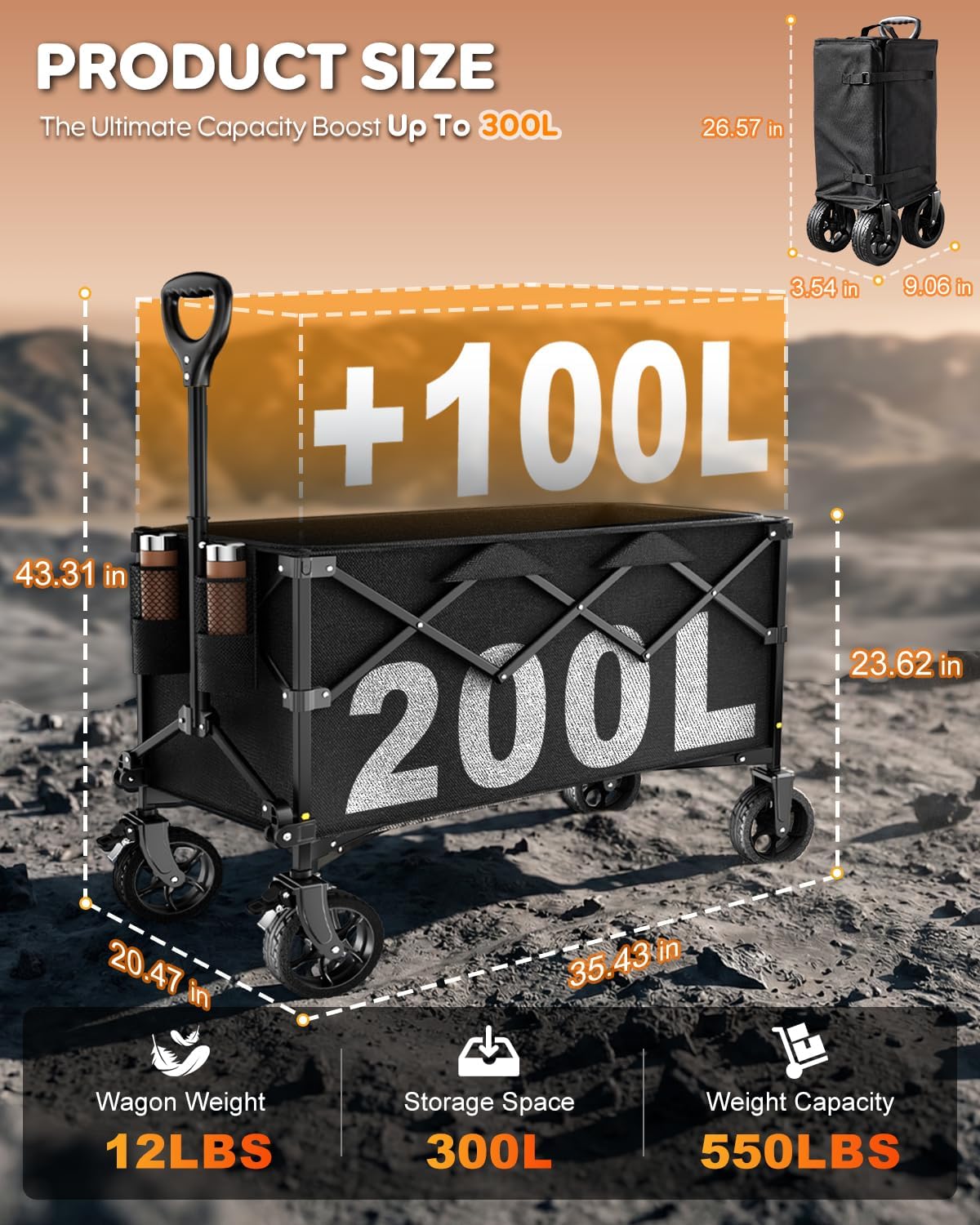
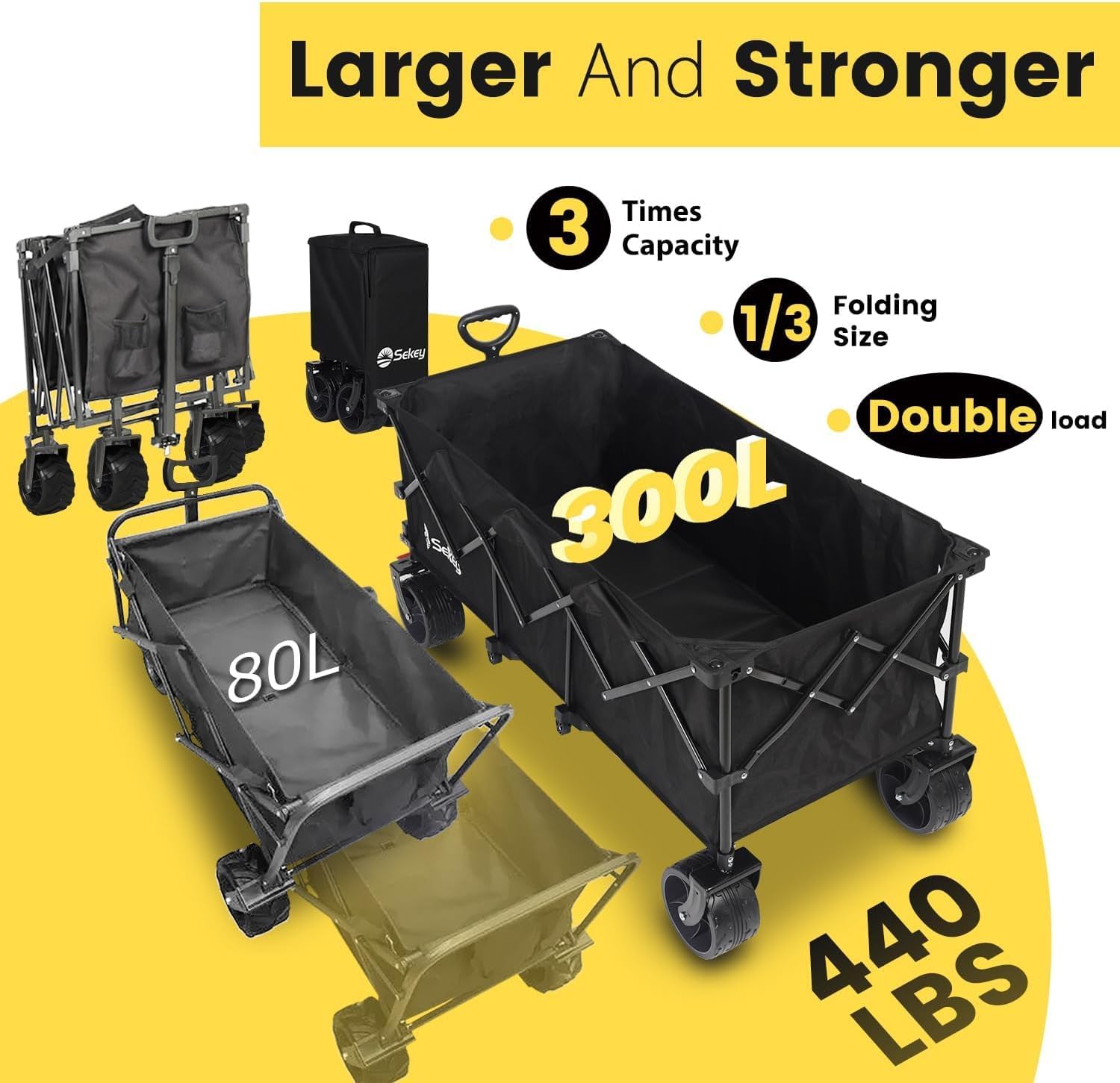
| Volume | — | 300L | 200L |
| Length | — | 48 in | — |
| Shelves | 2 | — | — |
| Wheel type | — | All-terrain | All-terrain |
| Drink holders | — | ✓ | — |
| Handle | Ergonomic | — | Adjustable |
| Price | $150.43 | $93.99 | $67.99 |
| See on Amazon → | See on Amazon → | See on Amazon → |
Why Capacity Ratings Are a Starting Point, Not a Finish Line
Load ratings on folding wagons — and on rigid utility carts — are typically determined under static conditions: a uniformly distributed load on a flat, hard surface, often measured during a short-duration test. That is not how you use a cart in the field.
The relevant variables that reduce real-world safe capacity below the rated number include:
- Surface type. Grass, gravel, and sand create uneven resistance across the four wheels. On soft terrain, two wheels can sink while two remain elevated, creating a twisting force on the frame that the static rating does not account for.
- Load distribution. A single dense object — a cooler, a bag of baseball bats, a generator — concentrates weight in one area of the bed rather than spreading it evenly. Point loading stresses the bed material and the frame joints far more than distributed weight.
- Dynamic loading. Every time you hit a curb cut, drag the wagon over a root, or haul it up a ramp, you’re applying a brief force spike that can be double or triple the static load.
- Duration. A 500 lb static rating does not mean the cart can sustain 500 lb over repeated daily loads for two years without frame fatigue.
Reviewers writing for Wirecutter (The New York Times) in their evaluation of outdoor utility wagons have noted consistently that fabric beds and seam attachment points are the first components to show wear under sustained heavy use — not the steel frames themselves. That finding aligns with what coaches and park maintenance workers report after extended field use: at real working loads in the 300–400 lb range, the stitching and bed-corner hardware are the honest failure mode.
The practical rule of thumb: treat a 440–500 lb capacity rating as a 300–350 lb working load limit for anything other than flat, hard-surface, short-distance use. That is not a knock on the products — it is how load ratings work across the entire equipment category, from sawhorses to cargo trailers.
Comparing the Three Tiers: Budget, Mid-Range, and Heavy-Duty
Not all folding wagons in the 440–500 lb class are built to the same standard. The frame material, wheel construction, and bed attachment method vary meaningfully across price tiers. Here is how they stack up.
Budget-Tier Folding Wagons (Under $120)
Budget wagons typically carry a 440 lb rating and use thinner-gauge steel tubing, fixed hard-plastic wheels, and a single-layer Oxford fabric bed. The hard-plastic wheels are the most limiting factor: they roll acceptably on asphalt and concrete but create excessive frame shock on gravel and cannot be used on grass without significant effort. Bed seams on budget models are the first failure point, usually appearing within 6–12 months under regular loads above 200 lb.
This Old House’s utility cart reviews identify hard-plastic wheel construction as a primary differentiator between budget and mid-tier utility carts — a finding that holds in the folding wagon category as well.
Heavy
$67.99
In stock on Amazon
Check price on AmazonMid-Tier Folding Wagons ($120–$220)
Mid-tier models typically rate at 440–500 lb and add foam-filled or pneumatic tires in the 10-inch diameter range, reinforced bed corners with metal grommets, and heavier-gauge frame tubing. The foam-filled tire is the most meaningful upgrade: it eliminates puncture risk, preserves terrain compliance on grass and packed gravel, and significantly reduces frame shock on uneven surfaces compared to hard plastic. Owners using mid-tier wagons for sports equipment transport consistently report two-plus years of usable service life when loads stay in the 250–350 lb range.
Consumer Reports’ buying guidance on utility and platform carts notes that foam-filled tires represent the best durability-to-maintenance tradeoff for carts used across mixed outdoor surfaces — a conclusion that applies directly to this tier.
Sekey
$93.99
In stock on Amazon
Check price on AmazonHeavy-Duty and Rigid Platform Carts ($220 and Up)
At the top of the range, rigid platform carts — steel or high-density polyethylene decks on fixed-leg frames — offer a fundamentally different load path. Because the deck does not flex, point loading from a single heavy appliance is distributed across the frame rather than concentrated at fabric attachment points. This Old House and Wirecutter (The New York Times) both identify rigid platform carts as the correct format for single-object appliance loads, freeze dryers, and facility corridor use where cleanability and surface stability matter more than terrain mobility.
HCD Magazine’s coverage of mobile equipment specification for healthcare environments reinforces this distinction: rigid-deck carts are specified for clinical and facility environments precisely because they provide a stable, level, wipeable surface that fabric-bed wagons cannot replicate.
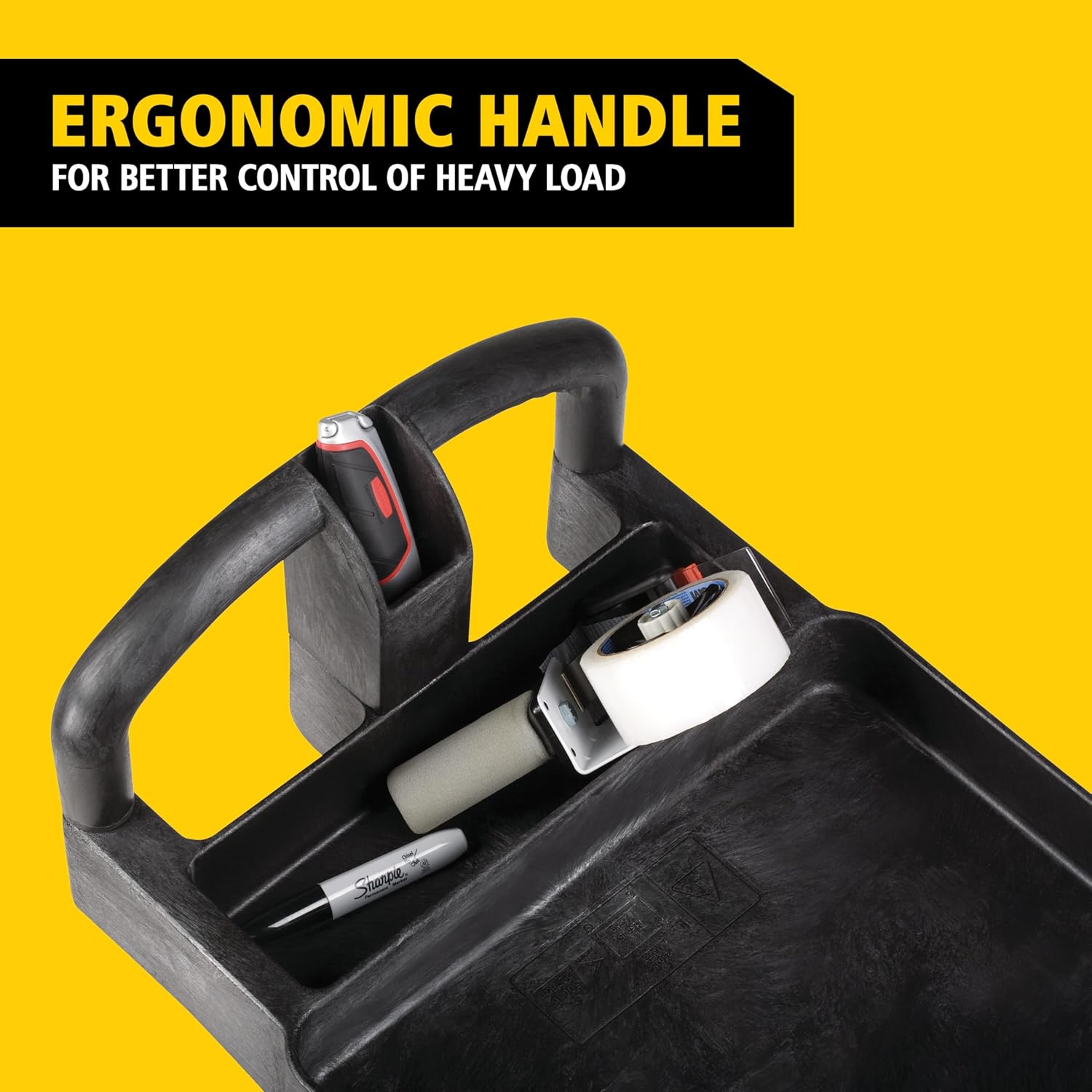
Rubbermaid
$150.43
In stock on Amazon
Check price on AmazonAll-Terrain Wheels: What “Handles Grass and Gravel” Actually Means
Every wagon marketed as heavy-duty claims all-terrain capability. The relevant specs are wheel diameter and tire construction — pneumatic (air-filled) versus foam-filled versus hard plastic.
Wheel diameter matters more than most buyers realize. A 10-inch wheel rolls over a 1-inch obstacle with significantly less frame shock than a 6-inch wheel. For gravel and packed dirt, 10-inch or larger wheels are a meaningful upgrade, not a marketing claim. For sand, wheel width matters as much as diameter — a wider footprint distributes weight and prevents sinking.
Pneumatic tires provide the best ride on uneven surfaces but are puncture-prone and require occasional inflation. Foam-filled tires eliminate puncture risk while preserving most of the terrain compliance. They are the better choice for coaches, park maintenance crews, and anyone who cannot afford a flat at an inconvenient moment. Hard plastic wheels belong on hard floors only.
Tipping risk on uneven terrain is real and underdiscussed. A folding wagon with a high center of gravity — fully loaded, tall-sided — is more tipping-prone on a cross-slope than a rigid four-wheeled cart with a lower profile. This is not a defect; it is physics. Approach all terrain transitions straight-on, not at an angle, when loaded near working capacity.
Noise on hard surfaces is a real-world factor that appears in no spec sheet. Foam-filled and pneumatic wheels on concrete produce a low rumble that is noticeable but not disruptive. Hard plastic wheels on the same surfaces are significantly louder — a relevant consideration in a quiet facility or a residential neighborhood at 6 a.m.
Folding Wagon vs. Rigid Cart: When Each Format Wins
This is the decision most buyers get stuck on, and the answer depends on use case more than capacity.
Folding wagons win when:
- You need to transport the cart itself — it folds into a vehicle trunk or cargo bed
- The load changes in weight and composition across uses (beach gear today, sports equipment next week)
- You’re covering mixed terrain where the pull-wagon format lets you navigate around obstacles
- Storage space is limited and the cart needs to hang on a wall or slide under a bench
Rigid platform carts win when:
- The load is a single heavy appliance or stationary object. A freeze dryer, for example, typically weighs 100–200 lb and runs continuously; the rigid deck and fixed legs of a platform cart provide stable, level support that a fabric-bed folding wagon cannot replicate under sustained static load.
- You’re moving loads frequently on flat, hard surfaces — warehouse, garage, facility corridor
- The cart needs to serve as a temporary work surface while stationary
- Cleanability matters — rigid plastic or steel decks wipe down completely; fabric beds hold moisture and debris
Wirecutter (The New York Times), in their outdoor utility wagon evaluation, consistently frames this split: wagons for transport and terrain versatility, platform carts for facility and appliance work. The two formats serve overlapping but distinct use cases, and buyers who choose the right format first — then optimize for capacity second — report the highest satisfaction.
Rigid-frame construction produces a perceptibly different handling experience. Because there is no flex in the load path, a well-built rigid cart reads as more solid even when its rated capacity is similar to a folding wagon competitor. That perception is accurate: the absence of fabric-bed flex means point loads distribute across the frame rather than concentrating at seam attachment points.
Shipping Damage and Long-Run Durability: The Hidden Variables
Heavy-duty products suffer disproportionately from shipping damage. Both large-capacity folding wagons and rigid platform carts show documented patterns of damaged-on-arrival units in owner reviews. The mechanism is straightforward — heavier items shift more forcefully in transit, and the rigidity that makes a cart strong in use can make it vulnerable to corner impacts in a shipping box.
Before ordering any cart in the 440–500 lb class, confirm:
- The retailer’s return and replacement policy for freight damage — ideally a no-hassle replacement within 30 days without requiring you to ship the damaged unit back at your expense.
- Whether the product ships via parcel carrier or freight — heavier rigid carts often ship freight, which can introduce lift-gate fees and delivery appointment requirements.
- Inspection protocol on arrival — if delivery is by freight, open and inspect before the driver leaves, even if the outer box looks intact. Document any damage photographically before assembling.
On long-run durability: at real working loads — not theoretical maximums — folding wagons in the heavy-duty segment hold up when used as designed. The components to watch over time are the fabric bed (seam separation at corners under repeated heavy loads), axle attachment hardware (loosening that requires periodic re-tightening), and any foam grip or handle material subject to UV and moisture outdoors. Products with replaceable bed inserts or available spare hardware have meaningfully better long-run economics.
Frequently Asked Questions
What does a 440 or 500 lb capacity rating actually mean for how I load the cart day-to-day? It means that is the maximum static load on a flat, hard surface under ideal conditions. In practice, use 60–70% of the rated capacity as your daily working limit — roughly 300–350 lb — to account for terrain variation, dynamic loading, and long-run frame health.
Do all-terrain wheels actually handle gravel, grass, and sand without tipping? Yes, with caveats. Gravel and grass are manageable with 10-inch or larger foam-filled or pneumatic wheels. Sand is workable on flat terrain but demands wide tires and a straight-line approach on any slope. Tipping risk increases on cross-slopes when loaded near capacity.
Is a folding wagon or a rigid utility cart better for moving heavy appliances in a garage? Rigid cart, consistently. A static appliance load on a fabric-bed folding wagon creates sustained point pressure on seams and attachment hardware. A rigid plastic or steel deck distributes the load properly and provides a stable platform if the appliance needs to sit in place while connected.
How loud are large-wheeled carts on hard outdoor surfaces like gravel or concrete? Foam-filled and pneumatic wheels produce a low, manageable rumble on concrete and gravel. Hard plastic wheels are noticeably louder on the same surfaces. If you’re operating in a noise-sensitive environment, foam-filled is the right call.
How do these products hold up after two or more years of regular heavy use? Based on owner reports across the category, the frame and wheel systems hold up well when used within realistic working loads. Failure points over time are the fabric bed (seam separation at corners), axle hardware (loosening requiring periodic re-tightening), and any foam grip or handle material subject to outdoor UV exposure.
The Decision Rule
If you’re moving varied loads across mixed terrain and need to transport the cart itself — folding wagon at 440–500 lb rated capacity, foam-filled wheels, confirmed return policy before ordering.
If you’re moving a single heavy appliance, need a stable work platform, or are in a facility environment where a flat deck and easy cleanability matter — rigid platform cart, rated capacity matched to your actual load, freight delivery terms confirmed in advance.
If you’re somewhere in between — sports equipment on grass fields, for example — the folding wagon wins on versatility, but buy on the assumption that the bed seams, not the frame, will be your maintenance point at the two-year mark.