A kitchen island cart is a freestanding, wheeled work surface you can roll around a kitchen — unlike a fixed island bolted to the floor, it moves where you need it and stores out of the way when you don’t. The two most common top materials are butcher block (thick slabs of edge-grain or end-grain hardwood, glued together in a grid pattern) and stainless steel (a corrosion-resistant metal alloy used in commercial kitchens for decades). Both materials do the same basic job — give you a place to prep food — but they behave very differently under daily use, moisture, heat, and the kind of hard-use cooking that comes with serious home kitchens or small professional operations. If you’re standing at a purchase decision right now, this article will give you the tradeoffs, the numbers, and a clear rule for which surface belongs in which workflow.
| EDITOR'S PICK[Homestyles Mobile Kitchen Islan…](https://www.amazon.com/dp/B000LNZ4SO?tag=greenflower20-20) | Mid-tier[Casual Home Kitchen Island with…](https://www.amazon.com/dp/B07GTCQLR9?tag=greenflower20-20) | Budget pick[HOOBRO Kitchen Island with Powe…](https://www.amazon.com/dp/B0BKQ3DL88?tag=greenflower20-20) | |
|---|---|---|---|
| Top Material | Wood | Solid Hardwood | — |
| Width (in) | 53.5 | 40 | — |
| Depth (in) | 18 | — | — |
| Height (in) | 36 | — | — |
| Dropleaf | ✓ | — | — |
| Power Outlet | — | — | ✓ |
| Price | $225.58 | $137.75 | $108.99 |
| See on Amazon → | See on Amazon → | See on Amazon → |
What Each Surface Actually Is (and Isn’t)
Before comparing, it helps to understand that not all butcher block and not all stainless is the same grade of product.
Butcher block comes in two main constructions: edge-grain (boards laid on their long sides, like a cutting board scaled up) and end-grain (boards stood on their ends, showing the growth rings — the classic checkerboard look). End-grain is self-healing — knife cuts partially close as the wood expands — and is generally considered the premium option. Edge-grain is more dimensionally stable and slightly less expensive. Both require periodic oiling with food-safe mineral oil to maintain a moisture barrier. As documented in This Old House’s “Butcher Block Countertops: A Complete Guide,” unsealed or poorly maintained butcher block will absorb water, swell, and eventually crack at the glue joints — so the maintenance requirement is real, not optional.
Stainless steel for countertops and cart tops is specified by two numbers: gauge (the thickness of the metal — lower gauge = thicker, so 16-gauge is heavier than 20-gauge) and grade (the alloy composition — 304-grade stainless resists corrosion and acids well; 430-grade is cheaper but more prone to rust in wet environments). NSF International’s food equipment standard NSF/ANSI 2 specifies that commercial kitchen surfaces contacting raw proteins or subject to chemical sanitizing must be non-porous, non-absorbent, and cleanable to a defined standard. Stainless steel at proper gauge meets this requirement readily; raw wood does not, which is why health codes in most jurisdictions prohibit unsealed wood surfaces in licensed commercial food prep areas.
The tier of cart you’re shopping also matters. Entry-level rolling islands in the $150–$350 range often pair thin stainless (18–20 gauge) or rubberwood butcher block (a plantation hardwood that’s softer and cheaper than maple or walnut). Mid-range carts in the $400–$700 range typically offer maple or acacia block tops at 1.5–2 inches thick, or 18-gauge 304 stainless. Premium carts in the $700–$1,100 range include solid maple or walnut tops with dovetail or mortise-and-tenon joinery in the cart base, or heavy 16-gauge stainless with integrated backsplash lips.
Side-by-Side: The Tradeoffs That Actually Matter
The decision for practitioners who’ve already ruled out the cheap tier usually comes down to three dimensions: durability and repairability, food safety and cleanability, and aesthetic fit. The subsections below work through each, with tier markers showing where each surface type earns the recommendation at each price band.
Surface Durability and Repairability
Stainless scratches. This is the headline complaint in aggregated owner feedback on stainless cart tops across every price point. Apartment Therapy’s coverage of stainless steel countertops describes scratching as “inevitable and noticeable” within the first months of active use. Light scratching can be reduced by cleaning with the grain (directional strokes, not circular), but deep gouges are permanent without professional refinishing. The upside: stainless won’t warp, won’t crack at seams, and doesn’t care whether you leave a wet towel on it overnight.
Butcher block dents and cuts — but owners consistently report that a light sand with 120-grit paper followed by a fresh coat of food-safe mineral oil restores it close to new. Wood Magazine’s finishing guidance for maple block surfaces describes this process as a straightforward DIY task requiring no specialized tools. The repairability gap here is significant and compounding: a scratched stainless top is permanently marked; a gouged butcher block top can be sanded smooth and re-oiled repeatedly over its lifespan.
At the budget tier (carts under $350), neither material performs impressively — thin stainless scratches immediately and rubberwood block dents easily. If durability is the priority at this price, stainless edges ahead only because it won’t absorb moisture or crack at glue joints the way entry-level rubberwood can.
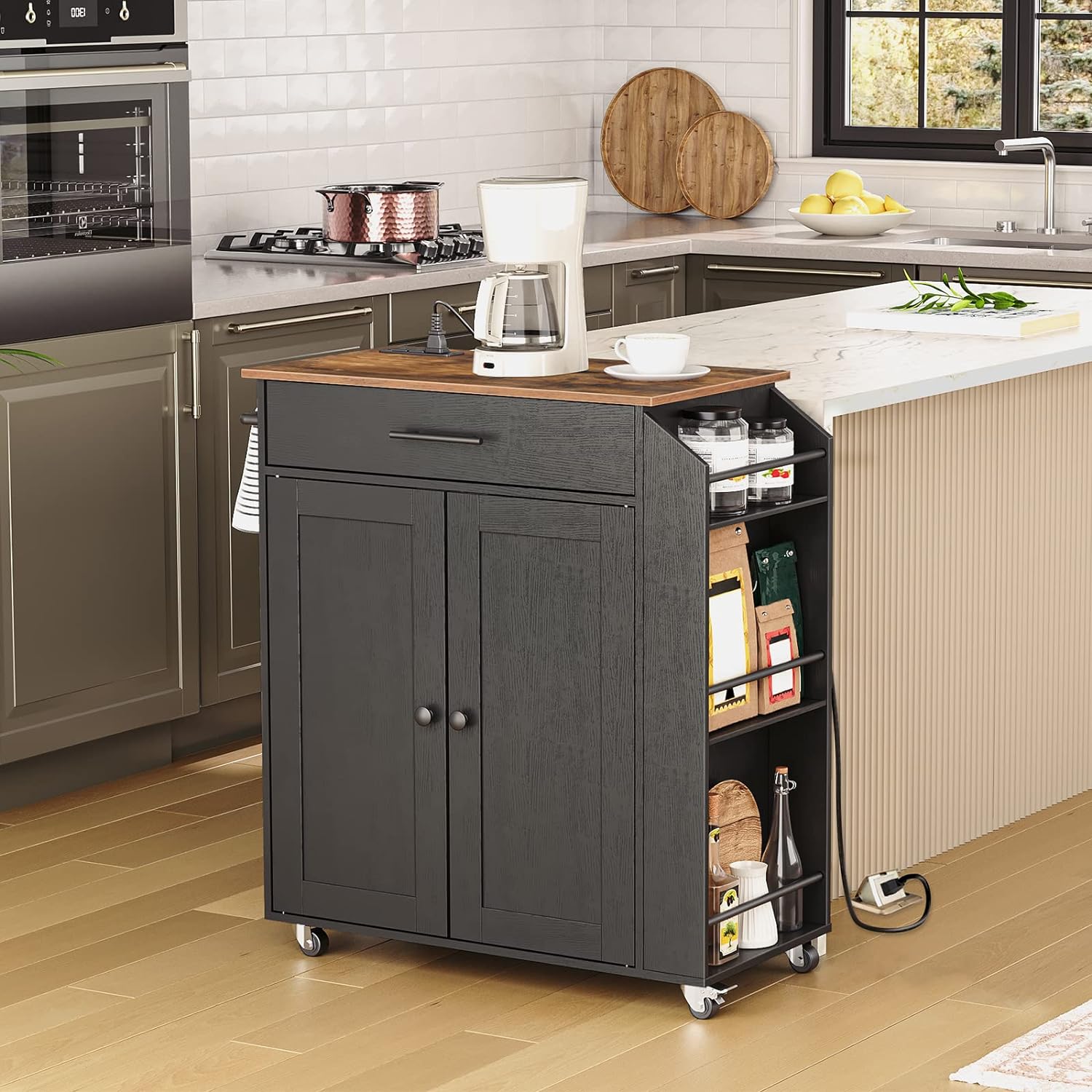
HOOBRO
$108.99
In stock on Amazon
Check price on AmazonAt the mid-range tier ($400–$700), maple or acacia butcher block at 1.5 inches thick becomes genuinely resilient, and the refinishing advantage over 18-gauge stainless becomes meaningful for high-frequency home cooks. Consumer Reports’ kitchen countertop buying guidance consistently flags maintenance accessibility as a key long-term satisfaction driver — butcher block wins this dimension clearly at mid-range pricing.
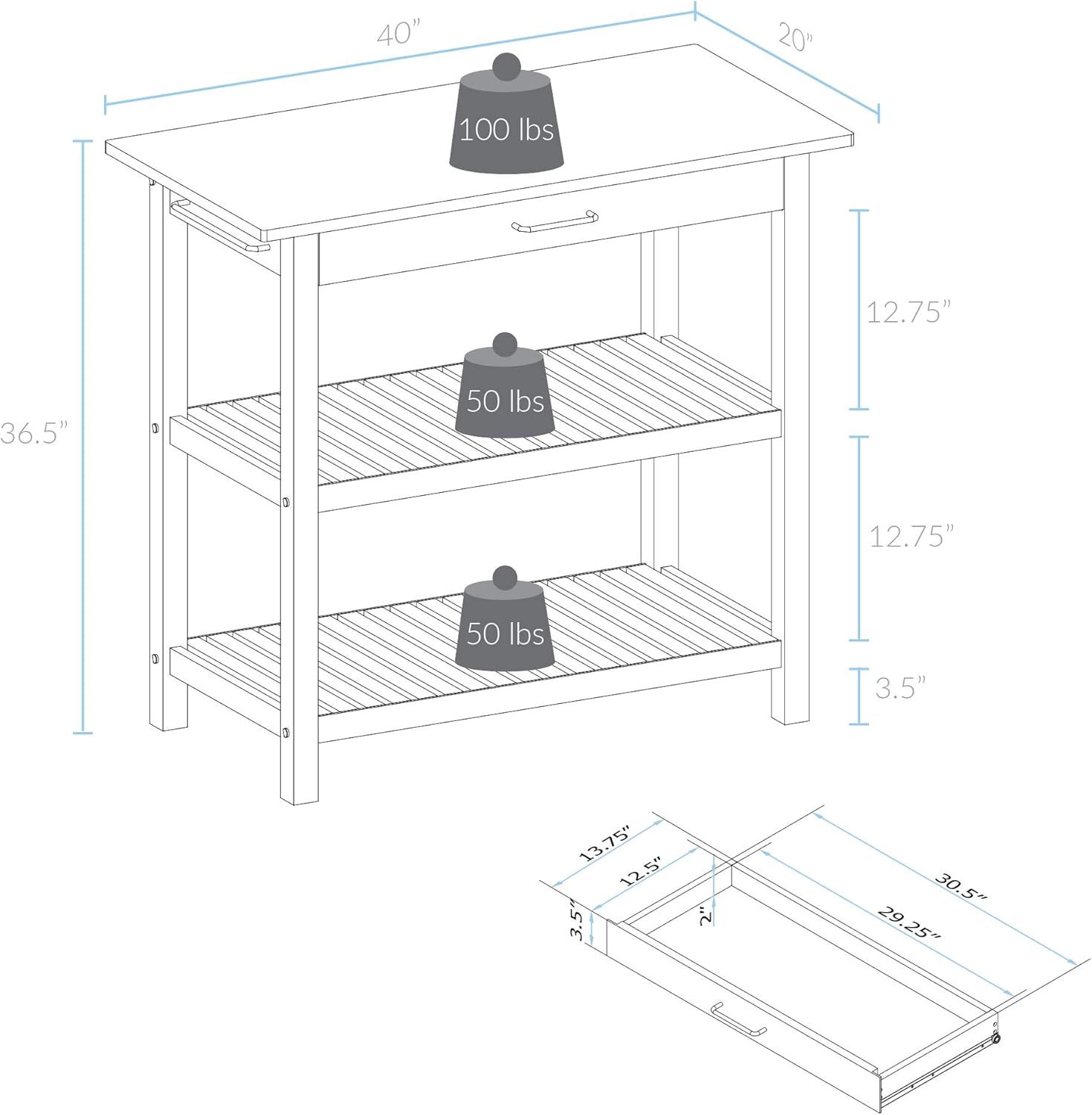
Casual 373-91
$137.75
In stock on Amazon
Check price on AmazonAt the premium tier ($700–$1,100), 16-gauge 304 stainless on a steel tube base and 1.5-inch solid walnut or hard maple on a hardwood base are both durable enough that the durability gap narrows — the decision here shifts to food safety requirements and aesthetic intent rather than raw longevity.
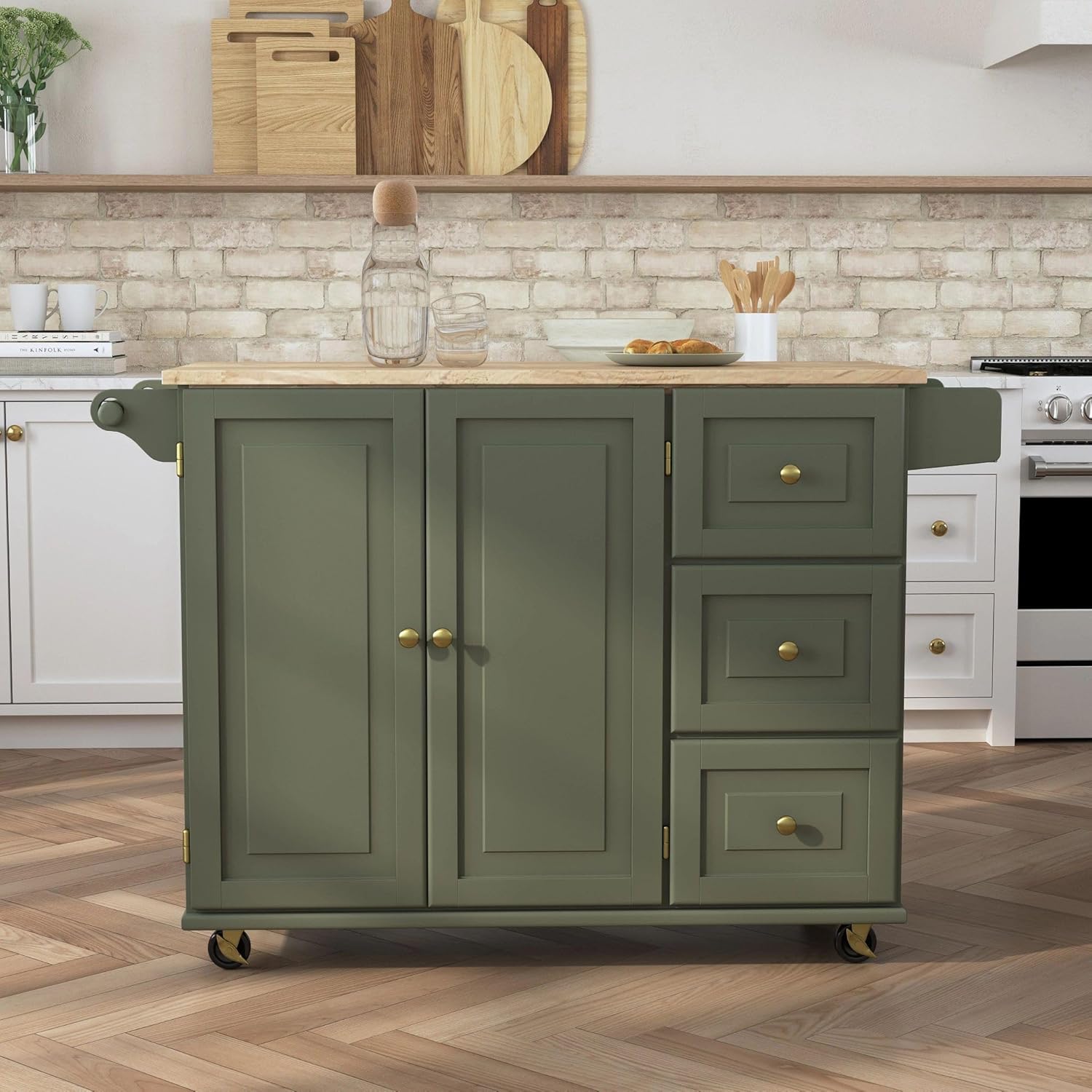
Homestyles
$225.58
In stock on Amazon
Check price on AmazonFood Safety and Cleanability
This is the clearest decision point for anyone running a licensed operation or cooking high volumes of raw protein.
Raw poultry, fish, and raw meat require surfaces that can be chemically sanitized between uses. Stainless steel — especially 304-grade at 16 or 18 gauge — handles bleach-based sanitizers, quaternary ammonium sanitizers, and steam cleaning without degrading. Per NSF International’s NSF/ANSI 2 food equipment standard, wood is porous: bacteria can migrate below the cut surface and survive standard sanitizing procedures. This is why wood surfaces are not approved for raw protein contact in licensed commercial settings. It does not mean butcher block is unsafe for home use — it means the hygiene standard is different and the risk management strategy must differ accordingly.
For home cooks: use your butcher block top for produce, bread, pastry, and dry prep. Use a separate cutting board for raw meat and fish. This is standard practice and eliminates the cross-contamination concern entirely without requiring you to abandon the warmth and repairability advantages of wood.
For any reader operating under a health department permit, cottage food law, or catering license: stainless is the only compliant choice. Don’t negotiate this one.
At the budget tier, a thin stainless top on a light cart frame is still preferable to rubberwood for any application involving raw protein — compliance requirements don’t scale by price.
HOOBRO
$108.99
In stock on Amazon
Check price on AmazonAt the mid-range tier, 18-gauge 304 stainless meets NSF/ANSI 2 requirements and handles standard food-service sanitizers without issue. For licensed home-based caterers or cottage food operators, this is the minimum viable specification.
Casual 373-91
$137.75
In stock on Amazon
Check price on AmazonAt the premium tier, 16-gauge 304 stainless is the commercial-grade specification and the correct choice for any reader with serious production volume or formal licensing. If you’re splitting use between licensed and home cooking contexts, premium stainless is the surface that covers both without compromise.
Homestyles
$225.58
In stock on Amazon
Check price on AmazonAesthetics, Heat Resistance, and Resale Signal
Stainless handles direct heat — a hot pan set directly on the surface leaves no damage. Butcher block will scorch and discolor if a cast-iron skillet comes off the burner and lands on it directly; trivets are mandatory with wood tops. Impact resistance flips the equation: dropping a heavy Dutch oven on thin stainless dents it permanently, while 1.5-inch butcher block absorbs impact and partially recovers as the wood’s moisture content normalizes.
On aesthetics, butcher block reads as warm, artisan, and period-appropriate in farmhouse, Scandinavian, or traditional kitchen designs. The grain pattern of edge-grain maple or end-grain walnut is genuinely attractive, and it’s a recognizable quality signal to home buyers and guests. Stainless reads as professional-grade and modern — it works in industrial, contemporary, or commercial-inspired kitchens, but can feel clinical in traditional settings.
Apartment Therapy’s design coverage through 2025–2026 consistently positions warm-toned natural materials, including butcher block, as strongly preferred in residential contexts. This Old House’s countertop coverage echoes the same finding: butcher block remains a top choice for home renovators seeking both functional warmth and resale appeal.
At the budget tier, neither material photographs particularly well — thin stainless shows fingerprints and uneven seams, and entry-level rubberwood lacks the visual character of maple or walnut. For design impact, save budget tier carts for utility applications rather than showcase kitchens.
HOOBRO
$108.99
In stock on Amazon
Check price on AmazonAt the mid-range tier, solid maple butcher block on a hardwood base is a meaningful aesthetic upgrade and signals quality credibly to prospective home buyers. A mid-range stainless cart works well in kitchens with commercial appliance suites but requires a design context that supports the industrial look.
Casual 373-91
$137.75
In stock on Amazon
Check price on AmazonAt the premium tier, solid walnut end-grain or thick hard maple on a dovetail-joined hardwood base is a genuine furniture-quality piece that adds value in residential staging and sale contexts. Premium stainless on a welded steel base makes a different statement equally well — professional intent over residential warmth.
Homestyles
$225.58
In stock on Amazon
Check price on AmazonThe Numbers: Cost to Own Over 5 Years
| Factor | Butcher Block (Maple, 1.5”) | Stainless (304-grade, 18-gauge) |
|---|---|---|
| Cart purchase price (mid-range) | $450–$700 | $500–$750 |
| Annual maintenance cost | $10–$20 (mineral oil) | $0–$5 (cleaning products) |
| Refinishing at year 3 (if needed) | $0 DIY / $80–$150 pro | $150–$400 pro (scratches) |
| 5-year total cost of ownership | ~$500–$820 | ~$510–$875 |
The total cost of ownership gap is narrower than most buyers expect. The real cost difference shows up at the refinishing point: butcher block DIY refinishing is accessible to any owner; stainless refinishing requires a specialist and is often declined in favor of replacement. If you’re someone who won’t maintain either surface, stainless is more forgiving of neglect up to the point of deep scratching — after which it’s more expensive to remediate.
Cart-Level Considerations: What the Base and Casters Tell You About the Top
The surface is only part of the specification. Caster quality determines the cart’s longevity as much as the top material does.
Look for casters rated at 75–100 lbs each on a four-caster cart — that gives you a 300–400 lb total rating, covering a solid hardwood top plus typical load. Polyurethane or rubber casters protect hardwood floors; hard plastic casters are cheaper but mark floors over time. Locking casters on at least two wheels are non-negotiable for stability during active prep.
Base material matters equally. Solid hardwood bases (maple, beech) paired with butcher block tops are the quality indicator in the $600–$900 home-buyer tier. Steel tube bases paired with stainless tops indicate commercial intent. A stainless top on a particleboard or MDF base is a red flag — the base will fail before the top, and the cart isn’t worth repairing.
Decision Rule: If X, Then Y
If you’re a home cook who preps mostly produce, bread, or pastry, values warmth and aesthetics, and are willing to oil the surface every 2–3 months: choose butcher block. End-grain maple or walnut at 1.5-inch minimum thickness will serve you well for a decade or more, and the surface improves with proper care.
If you handle raw protein frequently, operate under any food-service permit or health code, cook at high volume, or simply don’t want a maintenance task: choose stainless at 304-grade, 18-gauge minimum (16-gauge if budget allows). The food safety and cleanability advantage documented in NSF International’s NSF/ANSI 2 standard is decisive, and the modern aesthetic works if your kitchen design supports it.
If you’re a home renovator choosing a cart for resale or design impact: butcher block wins the aesthetic argument in most residential contexts, per Apartment Therapy and This Old House design coverage through 2025–2026. A solid-maple top on a hardwood base photographs significantly better and signals quality to buyers more reliably than stainless equivalents at the same price point.
If your primary concern is long-term cost of ownership with zero maintenance: stainless edges ahead — but only if you accept that scratch accumulation is inevitable and budget $150–$400 for professional refinishing at some point in a five-to-ten year window.
The honest conclusion most practitioners arrive at: in a home kitchen without a permit requirement, butcher block is the more rewarding surface to live with if you’re willing to own the maintenance. In any commercial, catering, or licensed context, stainless is the only defensible choice. Pick the surface that matches your actual workflow, not the one that looks best in a product photo.