If you’ve recently been discharged from a hospital — or if you’re helping a family member manage a condition like kidney disease, a post-surgical recovery, or a regular infusion therapy schedule at home — you’ve probably realized the house wasn’t built for any of this. There’s nowhere to park the IV pole. The dialysis machine lives on the kitchen counter next to the toaster. Bedside medications end up in a plastic bin that tips over at 2 a.m. A rolling medical cart — a wheeled cabinet or open-shelf trolley built to hospital-style specs — solves most of those problems in one purchase. This guide is for patients, family caregivers, and home health aides who are actively buying one right now. We’ll compare the real options, name the tradeoffs honestly, and end with a clear decision rule so you can stop second-guessing.
Who Is Actually Buying These Carts (And Why It Matters)
The short answer: not who you’d expect. The clinical cart market was designed for nurses and occupational therapy departments, but reviewers across multiple platforms tell a very different story. Owners describe using a VEVOR medical trolley as a dedicated home IV cart for multiple infusions per week. JaboEquip cart owners store their dialysis machines in a lockable lower cabinet to keep equipment off the floor and away from pets. Lightweight open-tier utility carts get repurposed as postpartum bedside supply stations — diapers and wipes on the top shelf, pump supplies in the middle, snacks and medications on the bottom.
This matters for one practical reason: the specs that make a cart worth buying in a clinic are exactly the specs that make it worth buying at home in these situations. Lockable drawers aren’t paranoia — they’re how you keep a teenager out of controlled substances. Smooth-rolling casters (the swiveling wheels on the base) aren’t a luxury — they’re how a non-weight-bearing patient moves supplies from room to room without a second trip. Cleanability isn’t an institutional quirk — it’s how you prevent cross-contamination between IV prep and everyday kitchen use.
Healthline, in its overview of home infusion therapy titled “Home Infusion Therapy: What You Need to Know,” notes that patients receiving treatments like TPN (total parenteral nutrition — a nutrient solution delivered through a vein), IV antibiotics, or immunoglobulin therapy are increasingly managing prep and storage without daily nurse visits. The home environment, not the cart manufacturer, is the limiting factor — and the right cart closes that gap.
The Core Material Tradeoff: ABS Plastic vs. Stainless Steel
Most carts in the $80–$400 home-use price range fall into two material categories, and the choice isn’t as obvious as it looks.
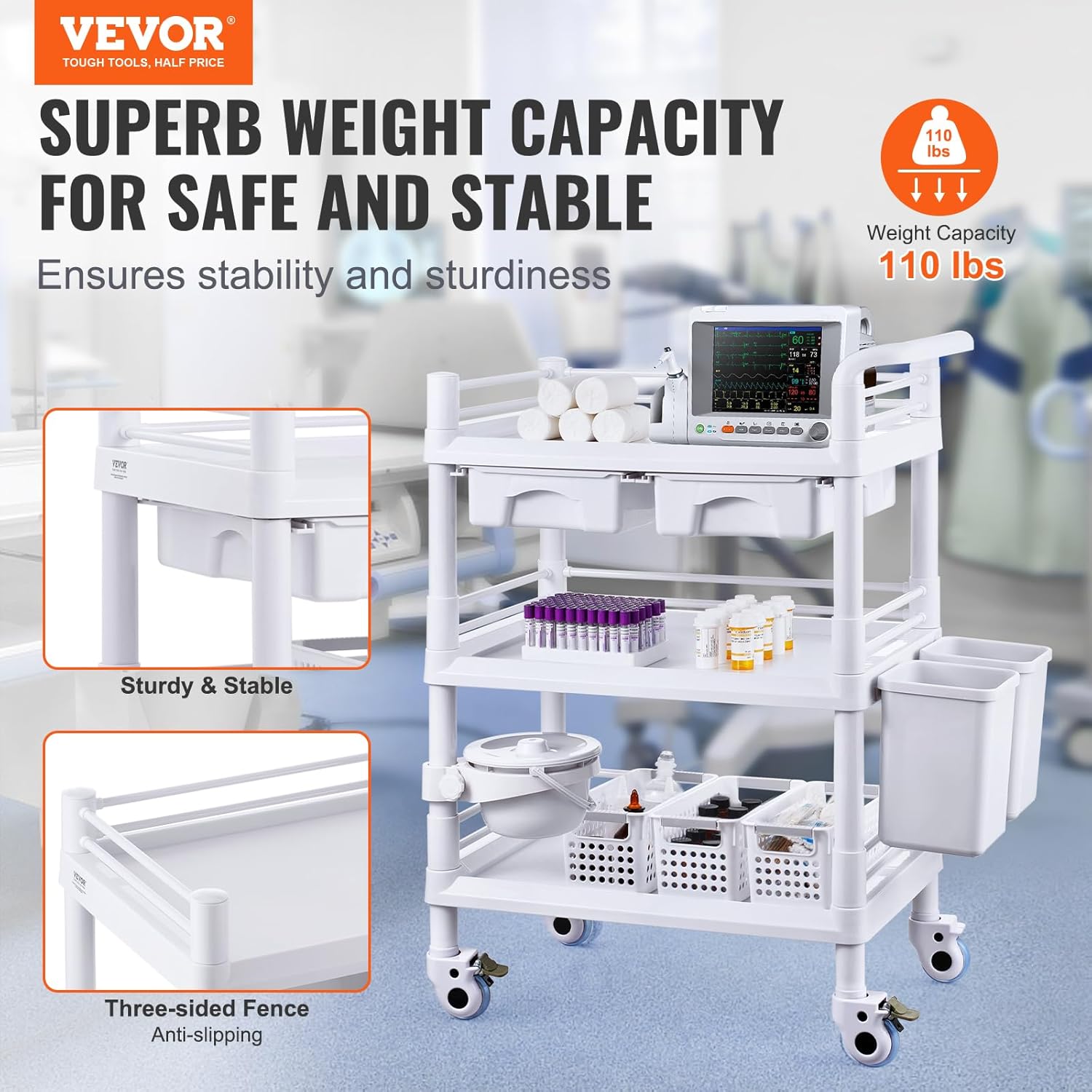
ABS plastic (acrylonitrile butadiene styrene — the same hard, slightly matte polymer used in appliance housings) is lighter, quieter in transit, gentler on floors, and — critically — does not rust. It also tends to arrive with more pre-assembled components. Reviewers of the VEVOR mobile medical trolley in the ABS configuration specifically call out that limited-mobility users can complete assembly from a seated position, and that slow self-closing drawers signal proper tolerancing rather than cheap spring-loading.
Stainless steel carries a premium perception, and sometimes earns it — but not always. The lowest-rated stainless carts in consumer review aggregations draw complaints specifically for poor surface finishing: raw edges, visible grinding marks, and brushed surfaces that trap rather than repel contamination. Stainless steel is graded — 304 and 316 are medical-grade alloys; 201 is a cheaper variant prone to surface corrosion — and the grade is rarely disclosed in consumer product listings. If a stainless cart doesn’t specify 304-grade, treat it as decorative rather than clinical.
The American Occupational Therapy Association, in its Home Modification and Assistive Technology Practice Guidelines, emphasizes that for clients managing immunocompromised conditions or wound care at home, surface cleanability is a primary specification criterion — not an afterthought. That guidance points strongly toward verified 304 stainless or high-quality ABS rather than ungraded budget alloys.
By the numbers:
| Material | Typical weight | Noise on hardwood | Rust risk | Disinfectant compatibility |
|---|---|---|---|---|
| ABS plastic | 15–25 lbs | Low | None | High (most alcohols / quaternary ammonium) |
| Stainless 304 | 25–45 lbs | Moderate–high | Minimal | High |
| Stainless 201 | 25–40 lbs | Moderate–high | Moderate over time | Moderate |
The Four Use Cases, and Which Cart Architecture Fits Each
1. IV / Infusion Therapy at Home
Mobile
$152.99
In stock on Amazon
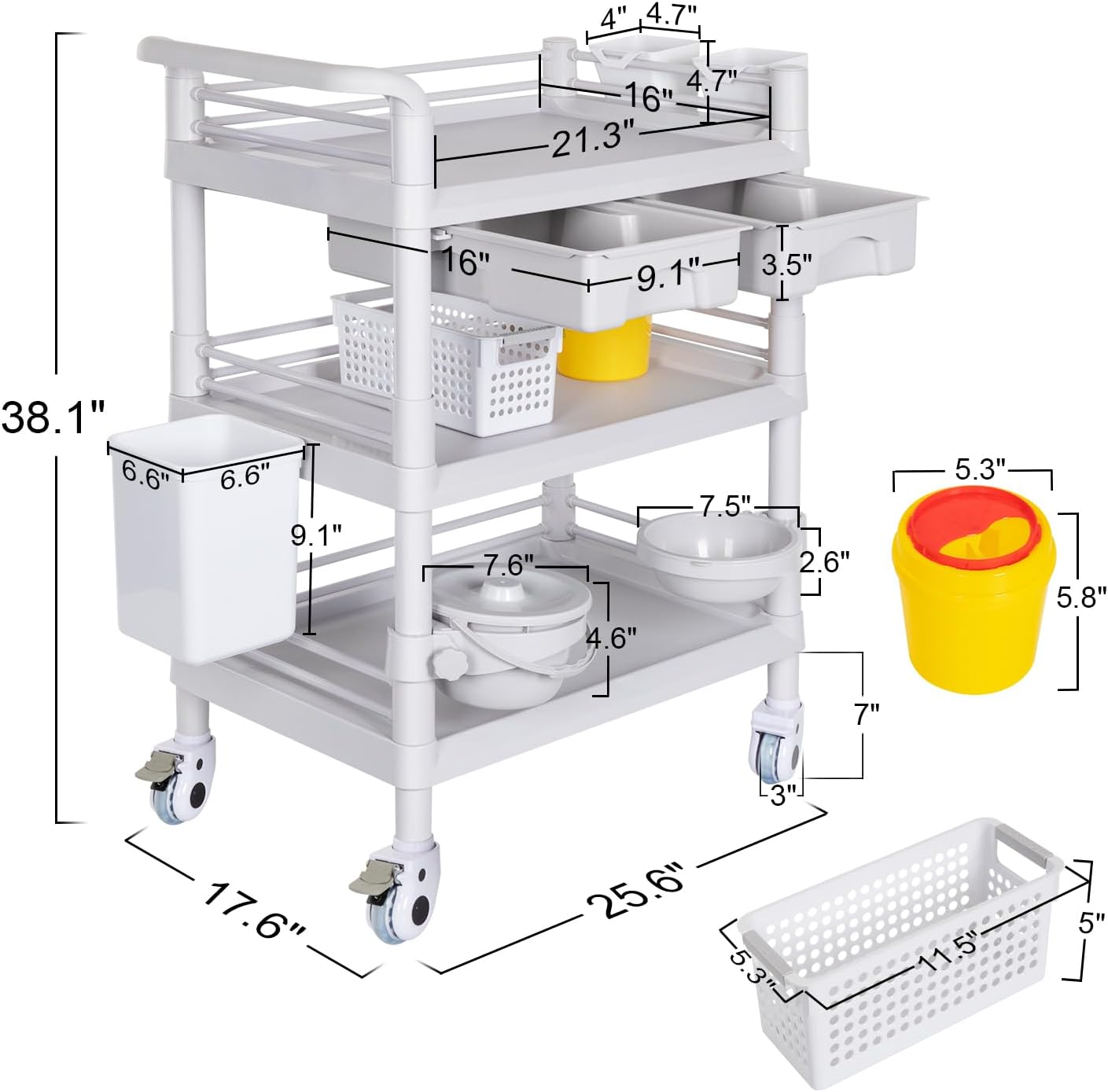
Check price on AmazonPatients on home IV therapy typically need: a pole-mount point or hook at the top for the IV bag, a drawer or shelf for tubing and syringes, and a lockable compartment for controlled medications. The VEVOR medical trolley architecture — an open pole top with a drawer bank below — directly mirrors hospital IV carts and is the closest consumer-accessible match to that workflow.
Dimensions matter more here than in most home applications. A standard IV bag on a 36-inch pole needs roughly 60–66 inches of total height clearance. Verify the pole height before ordering; many “medical” carts list overall height in centimeters in the spec sheet but advertise in inches with rounding that can cost you two inches of clearance.
2. Home Dialysis Machine Storage
Mobile
$152.99
In stock on Amazon
Check price on AmazonPeritoneal dialysis (PD) cyclers — the machines that perform overnight kidney filtering at home — typically weigh 12–18 lbs and measure roughly 14 inches wide by 12 inches deep by 12 inches tall. Home hemodialysis machines are heavier (up to 80 lbs for some models) and generally need a fixed surface, not a cart. For PD, the JaboEquip lockable-cabinet cart architecture works well: the machine on a middle shelf, dialysis solution bags stacked in the lockable lower section, tubing and prep supplies in accessible upper drawers.
The lockable cabinet question is not trivial. Consumer Reports’ utility cart evaluation coverage notes that residential cart locks are typically cam locks — a simple rotating cylinder — that deter casual access but would not meet pharmacy or clinical security standards. For most home dialysis users, that’s appropriate: the goal is preventing accidental access by children or confused elderly family members, not pharmaceutical-grade security.
3. Post-Surgery / Non-Weight-Bearing Recovery
Simple
$79.97
In stock on Amazon
Check price on AmazonThis is the use case where cart architecture matters most and is most commonly gotten wrong. A patient on non-weight-bearing (NWB) restrictions — typically after foot, ankle, or knee surgery — cannot carry items while using crutches or a knee scooter. A cart that moves with them solves this problem entirely.
Caregivers managing NWB recoveries describe lightweight collapsible carts — such as the WORKPRO collapsible utility cart — as effective room-to-room ferrying tools that eliminate the need for a second trip or a second person. The key specs for this use case are caster quality and handle placement. Casters should be 2.5–3 inches in diameter for smooth transitions over thresholds; smaller casters catch on door transitions. A push handle should be at standing or seated height depending on the patient’s primary mobility mode.
Apartment Therapy’s rolling cart coverage consistently flags that inexpensive caster sets — those with plastic ball bearings rather than steel — develop wobble within six months of regular use. For a recovery cart used multiple times daily, that timeline is unacceptably short.
4. Postpartum and Extended Bedside Care
Simple
$79.97
In stock on Amazon
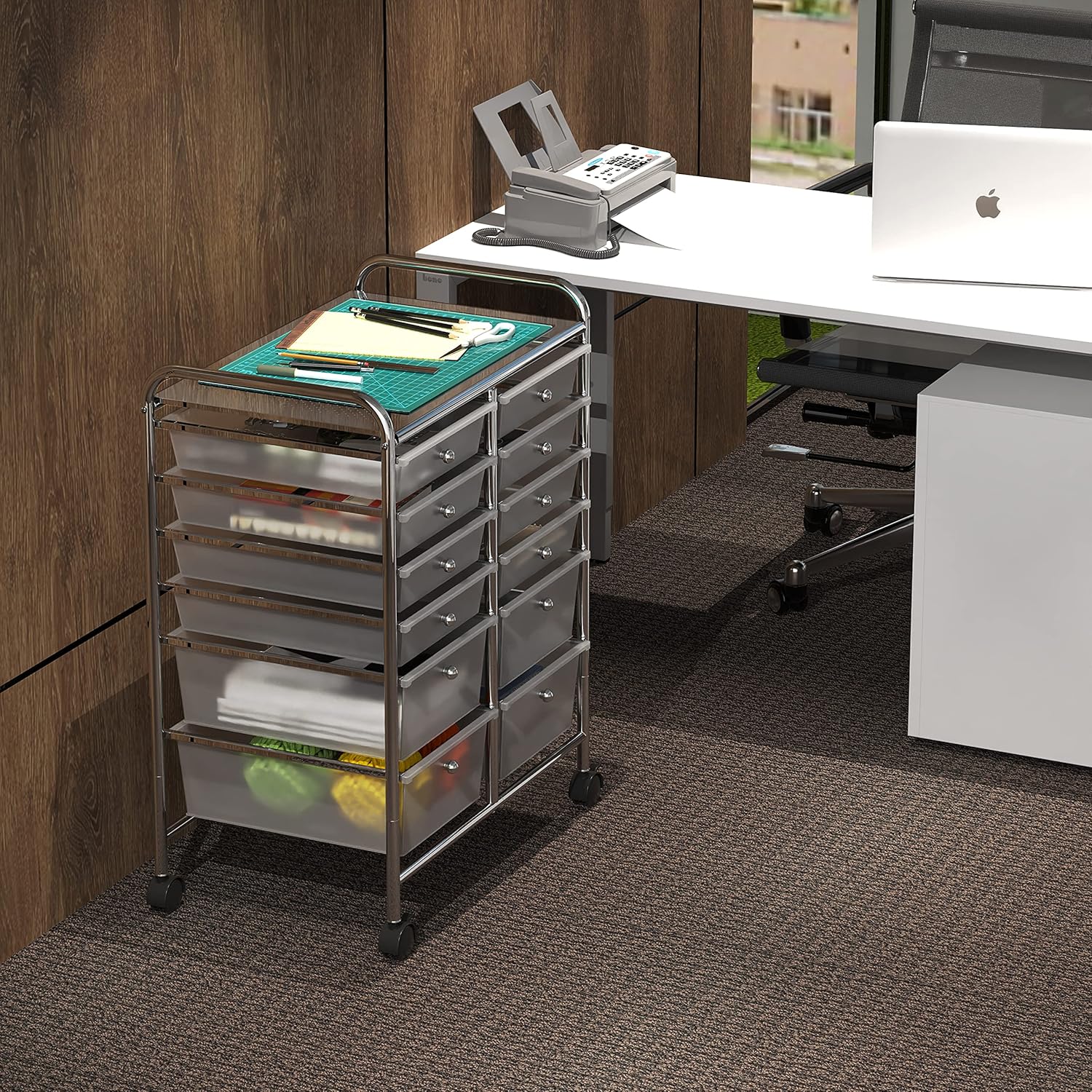
Check price on AmazonOpen-tier ABS utility carts — the Simple Houseware three-tier model is a widely reviewed example — represent the lightest-duty option in this guide, and for postpartum or extended bedside care of a family member, they’re often the right call. Open shelves mean no fumbling with drawer handles at 3 a.m. The relatively light frame is easy to position around a bed without disturbing a sleeping partner. The tradeoff is obvious: no locks, no enclosed storage, no clinical-grade surface.
What Makes Wheels Quiet Enough for a Shared Bedroom
Caster noise is one of the least-discussed specs in product listings and one of the most commented-on in owner reviews. The dominant factor is caster material:
- Hard nylon or bare plastic on hardwood = loud, clacking
- Rubber-coated or polyurethane casters on hardwood = near-silent
- Locking casters with metal housing = louder when rolling, but stable when parked
For night-use carts in shared bedrooms, look specifically for “polyurethane casters” or “rubber-coated swivel wheels” in the spec sheet. Some VEVOR and JaboEquip listings specify this; many budget listings do not. If the listing shows a hard-plastic-looking wheel in the product photo with no material callout in the spec sheet, assume it will be audible on hard floors.
A secondary factor is overall cart weight on the floor when stationary. Heavier stainless steel carts require more force to initiate movement and produce a brief scraping sound on hardwood when first pushed. ABS carts, being lighter, roll with less initial resistance and restart more quietly.
Frequently Asked Questions
1. Are these carts safe for storing medications at home, and do the locks hold?
For most home use — keeping medications out of reach of children or preventing accidental access by someone with cognitive decline — the cam locks on consumer medical carts are adequate. They are not pharmaceutical-security rated, but they are not decorative either. If you’re storing Schedule II controlled substances at home, check your state’s home storage requirements; the lock standard on most consumer carts will not satisfy DEA storage regulations for controlled substances dispensed in quantities beyond a single prescription fill.
2. What is the difference between ABS plastic and stainless steel for home clinical use?
ABS is lighter, quieter, rust-proof, and almost always easier to assemble. Stainless 304 is more durable under heavy daily loads and is the clinical standard for infection control — but requires grade verification. Stainless 201 (common in discount listings) is neither: heavier than ABS without the durability advantage of 304. For most home patients, ABS from a named brand is the better starting point unless weight capacity or surface sterilization (autoclaving, which ABS cannot withstand) is a specific requirement.
3. Can these carts be disinfected with alcohol wipes regularly without damage?
ABS plastic and 304 stainless are both compatible with 70% isopropyl alcohol wipes and quaternary ammonium disinfectants (common hospital-grade wipe formulations). The failure mode for ABS is prolonged soaking, not regular wiping — so daily or per-use wipedowns are fine. For stainless, avoid bleach-based wipes over time; chlorine compounds accelerate surface pitting even on 304 alloy. Healthline’s home care hygiene guidance within its home infusion therapy overview recommends wiping prep surfaces before and after IV-related procedures, which a properly specified cart supports with no material degradation.
4. Which carts come pre-assembled or nearly pre-assembled for buyers with limited mobility?
The VEVOR mobile medical trolley in the ABS drawer-bank configuration is the most frequently cited in this category: reviewers report that only wheel attachment was required out of the box, and that the process was manageable from a seated position. Open-tier wire or ABS utility carts from Simple Houseware and Origami vary — check the listing’s assembly time claim and look for reviewer comments specifically mentioning limited dexterity or mobility.
5. Are the wheels quiet enough to use at night in a shared bedroom?
Polyurethane or rubber-coated casters on smooth flooring are effectively silent at walking pace. Hard nylon casters are not. Look for the caster material callout in the spec sheet, not the product photo. If the listing doesn’t specify, message the seller or assume noise and factor that into your choice.
6. Will a home dialysis or infusion machine fit on these carts — what are the real dimensions?
PD cyclers are typically 12–15 inches wide, 10–14 inches deep, and 10–13 inches tall. Most mid-tier medical trolleys offer shelf depths of 14–17 inches and widths of 14–20 inches — adequate for PD machines with room for tubing. Measure your specific machine before ordering and cross-reference against the listed interior cabinet dimensions, not the exterior cart dimensions. For home hemodialysis machines, machine weight (60–80 lbs on some models) exceeds the rated capacity of most consumer carts; a fixed table or dedicated stand is the appropriate solution.
The Decision Rule
If you’re managing IV therapy or wound care at home and need pole-mount capability plus secure medication storage: the VEVOR medical trolley architecture is your clearest match — specify polyurethane casters and verify the pole height clears your ceiling with the bag loaded.
If you’re storing a PD cycler and supplies: the JaboEquip lockable-cabinet layout handles the machine footprint and keeps dialysate bags enclosed and off the floor. Confirm interior shelf dimensions against your machine’s spec sheet before ordering.
If you’re in post-surgical NWB recovery and need a cart that moves with you: prioritize caster size (2.5 inches minimum) and overall cart weight over storage features. A lightweight collapsible ABS cart will serve better than a heavy stainless unit regardless of the brand.
If you’re setting up a bedside care or postpartum station and noise is the primary concern: open-tier ABS carts with rubber casters outperform enclosed carts in this scenario — there’s nothing to open, nothing to lock, and nothing to wake someone at 3 a.m.
The honest cost of getting this wrong isn’t the purchase price — it’s the six months of workarounds before you replace it. Match the architecture to the actual clinical workflow, and you’ll buy once.