If you’ve ever watched a teacher wedge an overstuffed tote into a supply closet, muscle it over a door threshold, or drag it across a parking lot on a field trip day, you already know that not every hauling solution is built for a school’s reality. A rolling cart — any wheeled container you pull or push to move supplies between rooms — sounds simple enough, but the format you choose (soft-sided canvas bag, rigid plastic crate, or a collapsible hybrid somewhere in between) shapes your entire daily workflow. Choose wrong and you’re fighting your cart instead of teaching. This guide breaks down the three dominant formats, names the specific products that keep showing up in teacher reviews, and ends with a clear decision framework so you can stop comparing and start buying.
| EDITOR'S PICKKEDSUM 2 in 1 Rolling Cart with… | Mid-tierdbest products Quik Cart Collap… | Budget pickECR4Kids Universal Collapsible… | |
|---|---|---|---|
| Weight capacity | 290 lbs | 80 lbs | — |
| Volume capacity | 70 L | — | — |
| Color | — | Red | Black |
| Can be a seat | — | ✓ | — |
| Included lid | ✓ | — | — |
| Price | $104.99 | $43.90 | $26.97 |
| See on Amazon → | See on Amazon → | See on Amazon → |
The Three Formats, Defined
Before running specs, it helps to get the vocabulary straight, because marketing copy tends to blur the lines.
Canvas bag carts are soft-sided rolling bags — think structured luggage — mounted on a telescoping handle and two to four wheels. The ECR4Kids rolling teacher bag is the benchmark here: according to ECR4Kids ELR-series product specification sheets, the bag is engineered with multiple exterior organizational pockets as a primary design feature, and owner accounts consistently identify those pockets as the feature that justified the higher price. At least one documented reviewer purchased the bag specifically to manage a neck injury, citing the upright rolling posture as a medical priority. The soft shell means the bag conforms slightly to irregular loads, but it also means the bag can list sideways when not fully packed — a pattern LOVEVOOK rolling teacher bag owners flag repeatedly. The LOVEVOOK earns praise for zipper quality and interior size, but reviewers note that a half-loaded bag loses its spine and leans.
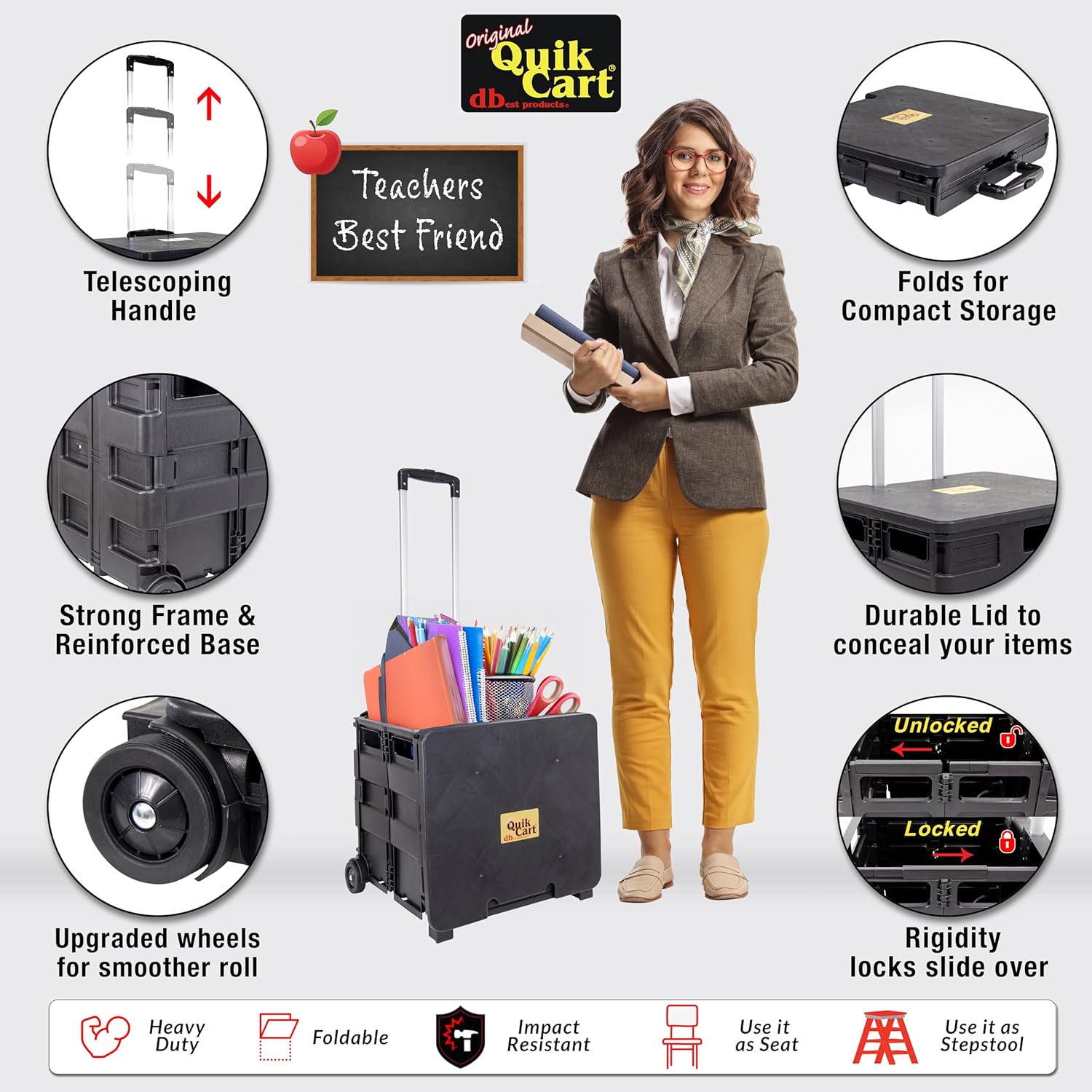
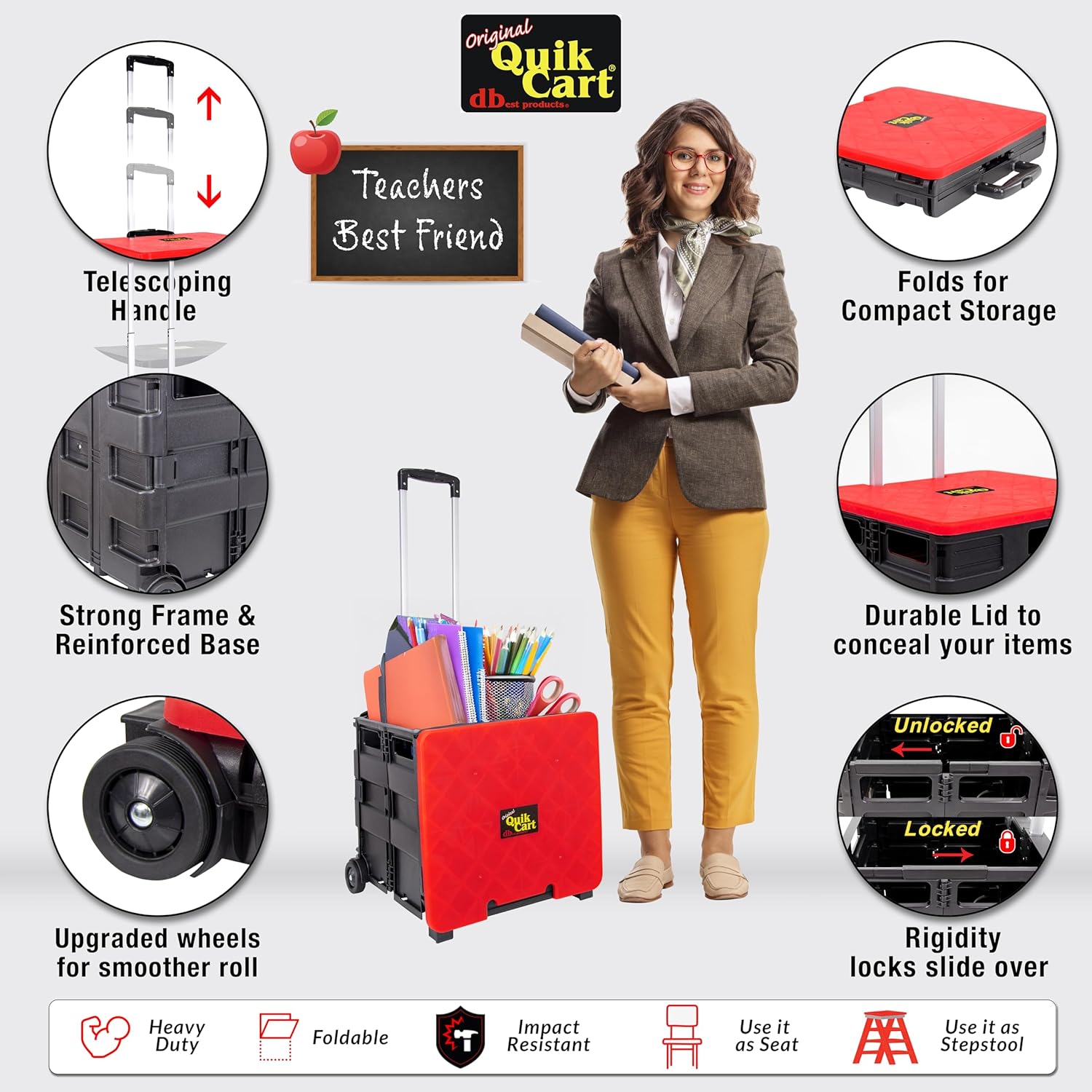
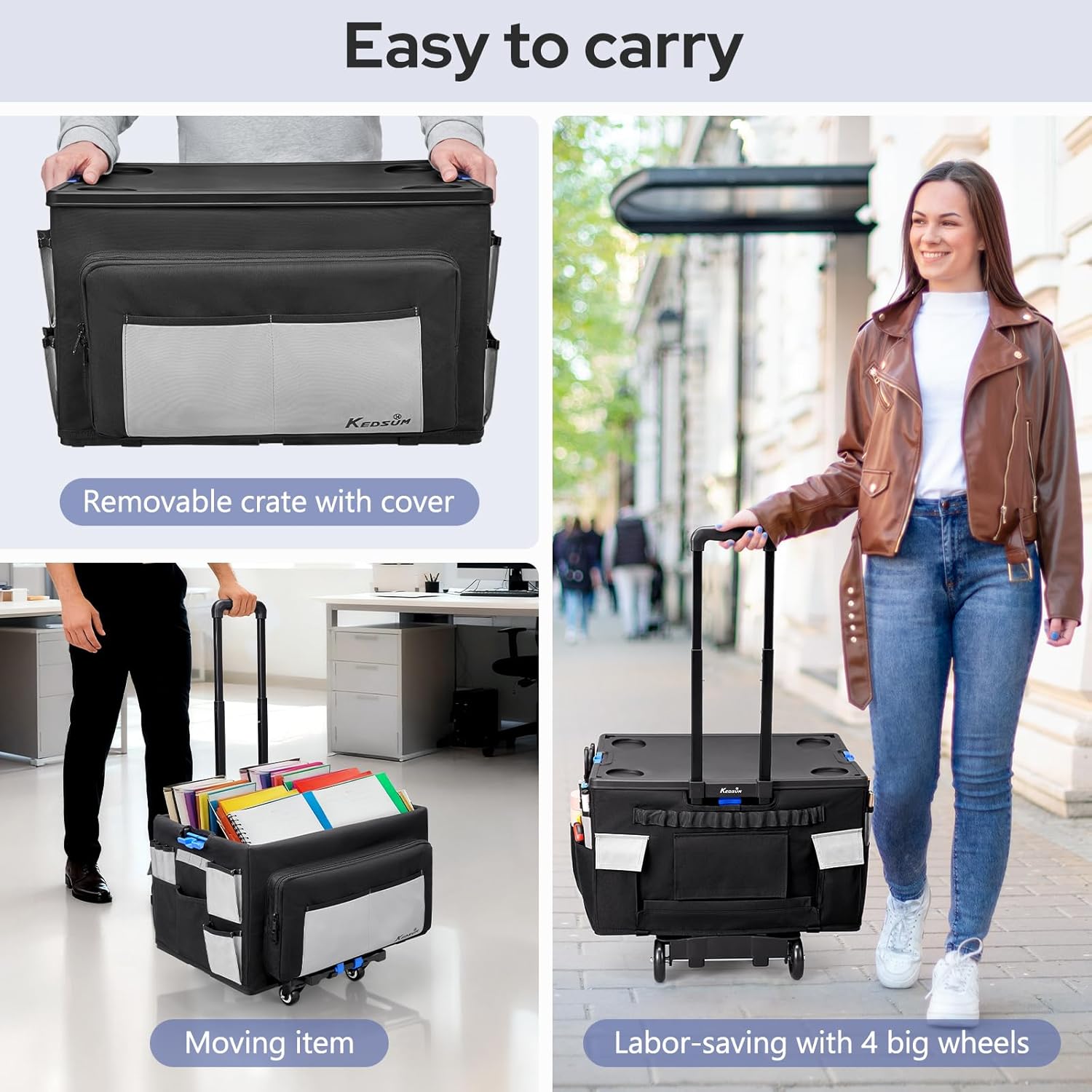
Rigid crate carts are hard-shell plastic bins on wheels — sometimes sold as utility carts or rolling storage crates. The dbest Quik Cart sits squarely in this category. Owners report outdoor rolling performance on pavement, lawn, and gravel as a genuine strength, with multiple reviewers citing five-plus years of use before any meaningful failure. The tradeoff: a recurring complaint about corner damage on arrival and the logistical challenge of returning a large, awkward item if damage occurs. KEDSUM’s rigid rolling crate draws a specific notable review from a 6-foot user who called out the handle height as the first cart that finally worked ergonomically for a taller frame.
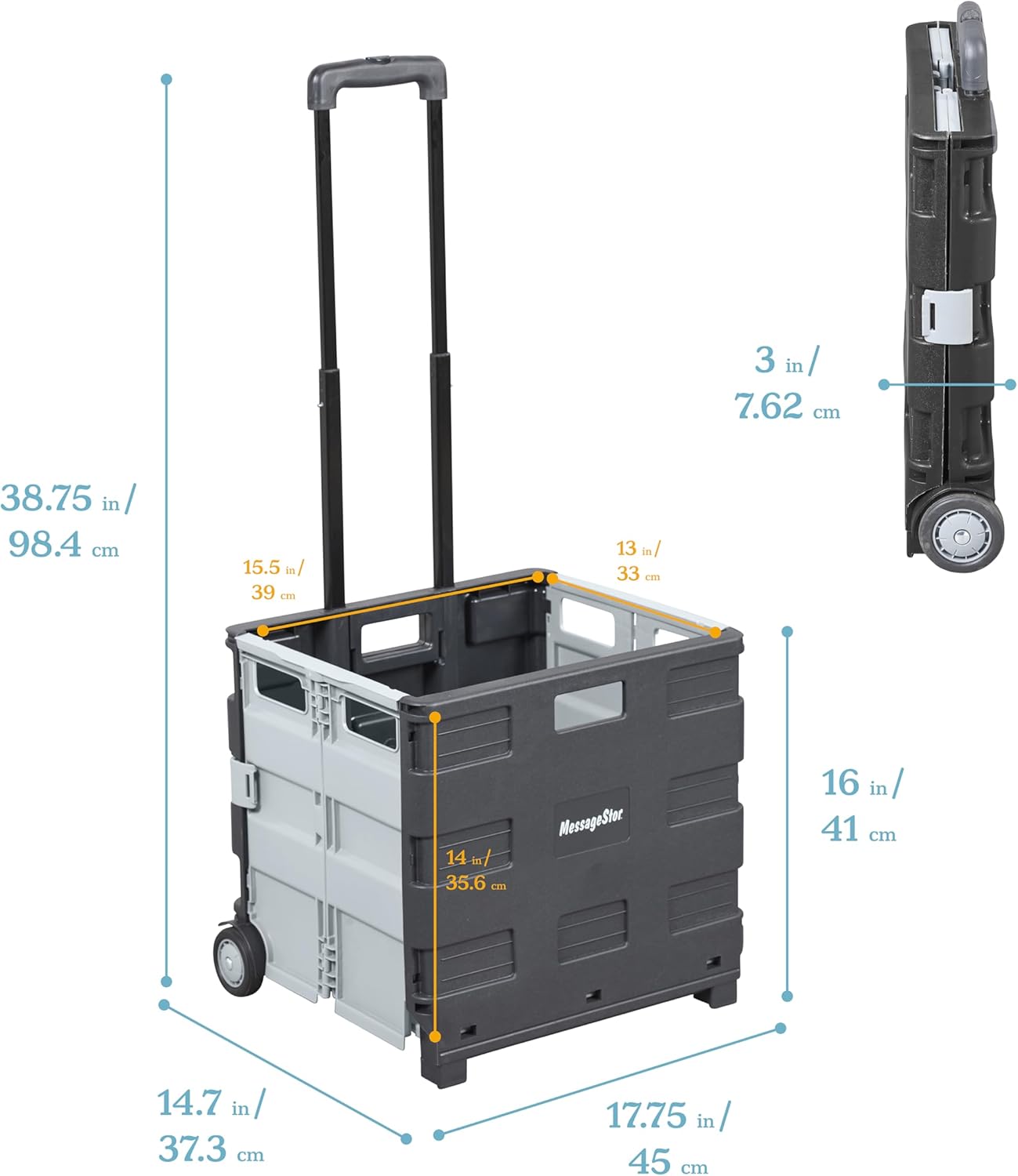
Hybrid tote carts are collapsible crates with swivel caster wheels and, often, a structural lid. CleverMade’s SnapBasket design — per CleverMade SnapBasket LUXE product specification and capacity documentation — is rated for loads in the 30–60 lb range with a four-swivel-wheel base and a lid designed for flat-surface use. A meaningful number of reviewers who expected a flimsy collapsible bin reported that the lid functioned as a credible temporary work surface. When collapsed, these pack flat for storage — a meaningful advantage in schools where closet space is rationed. The tradeoff is that collapsible frames carry more durability uncertainty over multi-year daily use compared to rigid shells.
Side-by-Side: What the Numbers Look Like
The table below reflects manufacturer-published capacity figures from ECR4Kids ELR-series specification sheets and CleverMade SnapBasket LUXE product documentation, supplemented by wheel and collapse data from product listings. Real-world loads reported by owners typically run 10–20% below rated max for sustained daily use.
| Format | Typical Weight Capacity | Wheel Count | Collapses for Storage | Outdoor Terrain Performance |
|---|---|---|---|---|
| Canvas bag (ECR4Kids, LOVEVOOK) | 25–40 lbs rated | 2 inline or 4 swivel | No | Moderate (smooth surfaces best) |
| Rigid crate (dbest Quik Cart, KEDSUM) | 50–75 lbs rated | 2–4 | No | Strong (grass, gravel, pavement) |
| Hybrid tote (CleverMade SnapBasket) | 30–60 lbs rated | 4 swivel | Yes | Moderate to strong |
The weight capacity gap between canvas and rigid formats is the number that matters most if you’re hauling manipulatives, reams of paper, or art supplies. A rigid crate’s structural shell distributes load across the frame; a canvas bag distributes it through the fabric and the handle attachment points — the part that fails first in high-load, high-frequency use. Consumer Reports, in its rolling luggage and tote durability guidance, identifies handle attachment failure as the primary stress point in soft-sided wheeled carriers used for heavy daily loads.
The Tradeoffs That Matter in a Real School Day
Canvas Bag Carts: Best for Organized Daily Room-to-Room Hauling
For teachers whose primary need is moving organized supplies between classrooms on smooth interior hallways, the canvas bag format — led by the ECR4Kids rolling teacher bag — covers the daily use case better than either alternative. The exterior pocket architecture, documented in ECR4Kids ELR-series product specification sheets, gives each category of supply a fixed home: dry-erase markers stay separate from grading pens, charging cables don’t tangle with student folders.
Wirecutter, in its rolling cart product research notes, identifies handle height and wheel configuration as two of the top three fit factors for extended daily use. The ECR4Kids scores well on both: the telescoping handle adjusts to a posture-friendly height that multiple reviewers with neck and shoulder injuries have cited as a direct medical accommodation. The upright pull posture keeps load weight distributed through the wheels rather than the user’s wrist and forearm.
The honest limitation is partial-load stability. LOVEVOOK owners flag sideways listing at partial load as a recurring complaint — not a one-off outlier. If you start the day fully loaded and end it half-empty, a canvas bag without rigid lateral structure gets progressively worse throughout the day. The ECR4Kids holds its shape better at partial load because the exterior pocket panels add lateral rigidity, but neither canvas bag performs as cleanly as a rigid crate on this dimension.
Best for: Middle and elementary teachers doing daily room-to-room runs on smooth hallways with a consistent, organized supply kit. Not ideal for: Field trips, outdoor terrain, or loads above 40 lbs.
dbest
$43.90
In stock on Amazon
Check price on AmazonRigid Crate Carts: Best for Heavy Loads and Outdoor Terrain
If outdoor terrain performance or raw load capacity is the deciding variable, the rigid crate format earns its price. The dbest Quik Cart is the most reviewed cart in this category, with owners consistently reporting five-plus years of daily use and explicit callouts for grass, gravel, and parking lot performance. The mechanical reason is wheel diameter: larger wheels bridge surface irregularities rather than catching on them, which is why canvas bags with small inline wheels and compact-caster hybrids struggle on the same terrain where the dbest rolls cleanly.
Apartment Therapy, in its feature article on teacher classroom supply cart organization, identifies outdoor terrain as one of the most commonly underplanned variables at purchase time. Teachers who buy for hallway use and then discover they need field trip capability mid-year end up either managing an underpowered cart or buying twice. If there is any chance your cart will need to cross a field, a portable classroom ramp, or a gravel lot, plan for it at purchase.
The KEDSUM rigid rolling crate contributes the most useful ergonomic data point in this category: a documented tall-user review from a 6-foot user who identified the KEDSUM’s extended handle as the first rolling cart where the handle height actually fit. Consumer Reports, in its rolling luggage and tote durability guidance, reinforces that handle height is among the mechanical variables with the highest ergonomic impact in daily-use rolling carriers — not a cosmetic spec.
The corner-damage-on-arrival issue with rigid crates, particularly the dbest Quik Cart, is worth naming plainly. Across aggregated reviews, the pattern is consistent: most corner damage is cosmetic, but returning a bulky rigid crate through a carrier is genuinely inconvenient. Several reviewers opted to keep a cosmetically damaged unit rather than navigate return shipping. If you’re buying on a school purchase order with a hard deadline, build a buffer week into your timeline and verify your retailer’s return-label policy before ordering.
Best for: PE teachers, art teachers, science teachers, or anyone whose school day includes outdoor terrain, field trips, or consistent heavy loads above 40 lbs. Not ideal for: Teachers with very limited storage space who need a cart that collapses flat.
KEDSUM
$104.99
In stock on Amazon
Check price on AmazonHybrid Tote Carts: Best for Storage-Constrained Environments
The CleverMade SnapBasket occupies a category that didn’t fully exist five years ago: a collapsible crate rigid enough to function as a work surface, with four swivel caster wheels capable of handling moderate terrain. Per CleverMade SnapBasket LUXE product specification and capacity documentation, the unit collapses flat when not in use — the single most important feature for teachers working in schools where every square foot of closet and cabinet space is accounted for.
The lid-as-work-surface feature surprised reviewers who expected a typical flimsy collapsible bin. Owner accounts describe using the lid to sort papers, stage supplies for distribution, and write quick notes in hallway staging areas. It is not a desk replacement, and CleverMade does not publish a separate weight limit for the lid as a surface in its SnapBasket LUXE documentation; the practical guidance from owner use is that it handles light sorting and staging tasks reliably.
The four-swivel-wheel configuration is an advantage over two-wheel inline designs in crowded hallways: swivel casters allow repositioning without lifting, which matters when you’re navigating a hallway full of students between classes. The tradeoff is that small swivel casters lose to large fixed wheels on outdoor terrain — if field trip performance matters, the rigid crate is still the right answer.
The honest open question for the CleverMade and the hybrid category overall is multi-year daily durability. The hinge and latch systems that enable flat collapse are mechanical joints that fixed-shell crates simply don’t have. Owner reviews through mid-2026 are positive, but daily stair use over three-plus school years is a durability claim no collapsible crate in this category has yet earned across a review base large enough to state confidently. Wirecutter’s rolling cart product research notes that hinge and joint failure in collapsible storage systems typically surfaces in the second or third year of heavy daily use — not in the first.
Best for: Teachers in storage-constrained rooms who need a cart that disappears when not in use, and whose daily route stays on smooth interior surfaces. Not ideal for: Outdoor terrain, stairs as a daily fixture, or sustained loads at the upper end of the rated capacity range.
ECR4Kids
$26.97
In stock on Amazon
Check price on AmazonDecision Framework: Match the Format to Your Actual School Day
If your priority is outdoor terrain performance — field trips, portable classrooms, gravel lots — the rigid crate format, led by the dbest Quik Cart, is the clearest choice based on owner-reported durability and the multi-year use data in aggregated reviews. No other format in this comparison comes close on grass and gravel. Apartment Therapy’s feature article on teacher classroom supply cart organization identifies this as the most underplanned purchase variable among the teachers surveyed.
If your priority is organizational pockets and daily room-to-room hauling on smooth floors, the ECR4Kids canvas bag earns its price. The exterior pocket structure documented in ECR4Kids ELR-series product specification sheets is the feature reviewers keep returning to, and the upright rolling posture is documented as a direct medical accommodation for at least one buyer managing a neck injury.
If you have a physical injury or ergonomic constraint, start with handle height before everything else. The KEDSUM’s extended handle is the only cart in this group with a verified tall-user data point at 6 feet. Consumer Reports, in its rolling luggage and tote durability guidance, identifies handle height and wheel configuration as the two mechanical variables with the greatest ergonomic impact in daily-use rolling carriers.
If storage space is the binding constraint, the CleverMade SnapBasket is the only format that collapses flat, per CleverMade SnapBasket LUXE manufacturer documentation. The lid-as-work-surface bonus is real for teachers who need a temporary flat surface in a hallway or supply room. The open durability question on daily hinge stress over multiple school years is the honest risk to price in.
If you’re ordering a rigid crate against a deadline, build a buffer week for a potential corner-damage replacement cycle. The return logistics for a bulky item are real enough that most affected buyers in aggregated reviews chose to accept cosmetic damage rather than complete the return.
Frequently Asked Questions
Will a collapsible crate hold up to daily stair use over multiple school years? The long-run data is not yet conclusive. The CleverMade SnapBasket’s hinge system has held up in the owner reviews available through mid-2026, but daily stair use over three-plus school years is a durability claim no collapsible crate in this category has earned across a large enough review base. Wirecutter’s rolling cart product research notes that hinge and joint failure in collapsible systems typically surfaces in year two or three. If stairs are a daily fixture, a rigid crate is the lower-risk choice.
Does the canvas bag stay upright when only partially filled? It depends on the specific bag. LOVEVOOK owners flag sideways listing at partial load as a recurring operational problem — not an isolated complaint. The ECR4Kids holds its shape better because the exterior pocket panels add lateral rigidity, per ECR4Kids ELR-series product specification documentation. If you routinely carry a half-loaded bag, the ECR4Kids is the better choice on this dimension.
Can these carts handle outdoor terrain like grass or gravel? Rigid crates with larger wheels — led by the dbest Quik Cart — are the clear answer for outdoor terrain. Canvas bags and small-caster hybrids struggle on uneven ground. Apartment Therapy’s teacher classroom supply cart organization feature identifies outdoor terrain as a commonly underplanned purchase variable.
Is the lid on the CleverMade strong enough to use as a writing or work surface? Owner accounts describe it as functional for light sorting, staging supplies, and writing quick notes. It is not a desk replacement, and CleverMade does not publish a separate weight rating for the lid as a surface in its SnapBasket LUXE documentation. The practical guidance from owners is that it handles light tasks reliably but should not bear heavy or sustained loads.
What happens if a corner arrives cracked on a rigid crate? Returning a large rigid crate is genuinely inconvenient. The pattern across dbest Quik Cart reviews is that most corner damage is cosmetic and most buyers opt to keep the unit rather than navigate carrier pickup for a bulky item. If damage is structural, a return is necessary — check your retailer’s return-label policy before ordering and build a buffer week into any deadline-driven purchase.
Which format works best for a teacher managing a physical injury? Handle ergonomics first, format second. The KEDSUM’s extended handle is documented as the right fit for users 6 feet and taller. For neck or shoulder injuries, the ECR4Kids canvas bag’s upright rolling posture has been cited by at least one reviewer as a direct medical accommodation. Consumer Reports, in its rolling luggage and tote durability guidance, identifies handle height and wheel configuration as the two mechanical variables with the greatest ergonomic impact in daily-use rolling carriers.